S&P, Newbuilding and Demolition Update (December 15th, 2013)

Since our last market review two weeks ago, Nelson Mandela, a great human being and a great leader passed away in South Africa, but ‘selfie pictures’ by dignitaries attending the memorial service got as much attention as the man himself. In North Korea, a 67-year old ossified mummy was summarily executed on charges (among others) of ‘alcohol abuse’ and ‘womanizing’  (no wonder N Korea is not a shipping hub), while on reflection of a bull market in equities, MasterCard International (ticker: MA) has announced a 10-for-1 stock split.  Despite the bull market in equities (and commodities, and …), many companies are still hesitant to initiate stock splits – possibly reflecting on the QE-propelled bull market rather than consumption and confidence driven earnings, and thus, MasterCard’s split of about $800-share got attention; for shipping equities, reverse-stock-splits in order to meet the regulatory $1/share threshold are still more common than normal stock splits.

However, shipping’s proxy index, the Baltic Dry Index (BDI), has been having an exceptional time and closing at 2,330 on Friday, up approximately 28% in December, and 230% up year-to-date (BDI stood at 698 at the close of 2012.) The proverbial cat is out of the bag now, and more analysts are calling for a market recovery, basically on the main thesis that things are not as bad as they seem and the outstanding world orderbook has been declining over the last year as a percentage of the existing world fleet.  That may be the case, but institutional investors keep ordering (or supporting companies to order) more newbuildings; and the Chinese have announced these week some meaningful subsidies for still more newbuildings for Chinese-flagged tonnage.  Despite any doubting, we should be as festive as the season we are heading to, and note that presently, crude tanker spot freight rates – for ALL asset classes are higher than $30,000 pd, capesize vessels are making more than $40,000 pd, and in general most vessels – outside smaller containerships – trade on a cash positive basis; no a small achievement, especially having all markets moving higher on sync.

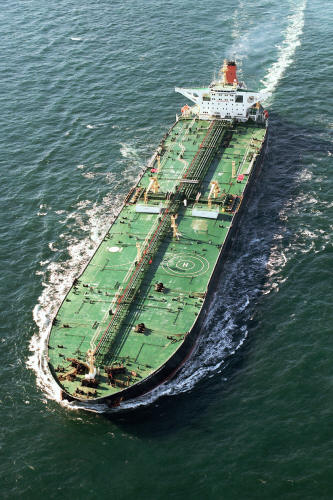
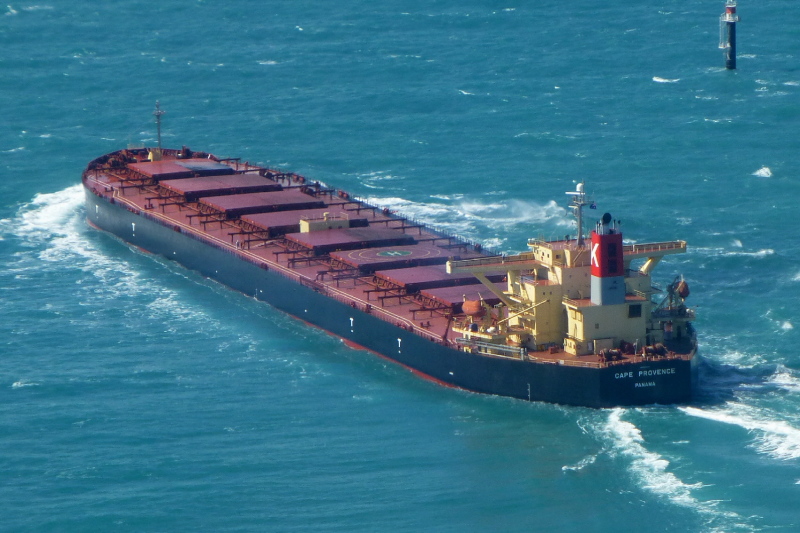
MV „CAPE PROVENCE” in laden condition (Image source: www.shipspotting.com)

MV „CAPE PROVENCE” in laden condition (Image source: http://www.shipspotting.com)

Cargill International has sold three capesize newbuilding contracts to the Scorpio Group (180,000 dwt, 2015, SWS) at a robust $57 million each, while simultaneously acquiring slightly older but much more competitively priced comparable tonnage: MV „SCOPE” (174,000 dwt, 2006, SWS) at $33 million, MV „PROUD” (178,000 dwt, 2009, SWS) at $42.5 million, and MV „CAPE PROVENCE” (177,000 dwt, 2005, Namura Shipbuilding) at $34 million, basically saving them $3 million per vessel per annum in depreciation.  We understand that the vessels acquired have short-term charter attached at below present market levels. The modern capesize MV „HOUHENG 3” (180,000 dwt, 2012, HHIC-Phil) was sold at about $50 million to Chinese interests, a rather soft price (compared to Cargill’s vessels), but the shipbuilder for the MV „HOUHENG 3” is not on the preferred list of many buyers. The older and out-of-class MV „GLORY ADVANCE” (171,000 dwt, IHI, 1996) was sold at auction at a scrap related price of $10 million to Chinese buyers, while the smaller and slightly older MV „PACIFIC CHALLENGER” (149,000 dwt, Dalian, 1995) managed a better pricing at $12 million with six-month forward delivery to her buyers, Winning Shipping in China.

MV „DYNA CRANE” (Image source: www.shipspotting)

MV „DYNA CRANE” (Image source: http://www.shipspotting)

On the panamax dry bulk front, the vessel MV „MARINE PROSPERITY” (73,500 dwt, Sumitomo, 2001) achieved a very respectable $16.5 million from buyers of Swiss Marine, while the NYK-controlled, gearless MV „SHIRANE” (77,500 dwt, Mitsui SB, 2000) obtained a solid $15.5 million from Indonesian interests. [This is the second dry bulk vessel disposed by NYK of late, as we recently reported the sale of MV „HOKURIKU MARU” (94,250 dwt, Mitsubishi HI, 1995) at $8.9 million to Chinese buyers]. As a general comment, panamax bulkers are not behaving greatly as an asset class in the last year, as their market seems to get cannibalized from bigger vessels (kamsarmax, post-panamax, etc) and smaller vessels (ultramax, etc) and there is the general belief that once the expanded Panama Canal opens, ‘panamaxes’ will be one of the worst hit asset classes. The Supramax market has been more active in general, with MV „DYNA CRANE” (55,750 dwt, Mitsui SB, 2006) achieving a solid price of $21.5 million to Olympic Shipping, which sale compares well with the sale in last month of MV „MEDI SHANGHAI” (56,000 dwt, Mitsui SB, C4x30T, 2005) at $19.5 million. The slightly older MV „ACS DIAMOND” (53,250 dwt, New Century, C4x35T, 2005) achieved a lowly $15 million. Lauritzen Bulkers has also disposed of MV „TOUCAN BULKER” and sistership vessel MV „THUNDERBIRD BULKER” (58,000 dwt, Tsuneishi Cebu, C4x30T, 2011) at about $30 million each to Swiss Atlantique.

MV „TOUCAN BULKER” (Image source: www.shipspotting.com)

MV „TOUCAN BULKER” (Image source: http://www.shipspotting.com)

The handysize / ‘handymax’ markets have also been busy, with MV „NEW RAINBOW” (42,740 dwt, IHI, C4x30T, 1998) achieving about $11.25 million, while MV „AZURE SKY” (45,750 dwt, Hashihama, 1995) a comparable price of about $8.5 million. In the handysize proper market, MV „TUNA 7” (32,250 dwt, Saiki HI, C4x30T, 1999) obtained a very respectable price in excess of $11 million, while same-builder but smaller vessel MV „TAO TRIUMPH” (23,750 dwt, Saiki HI, C4x30T, 1997) obtained $7 million. It was a better deal for the buyers of MV „SUPER ADVENTURE” (28,750 dwt, Tsuneishi Zosen, C4x30T, 1996) at $8.2 million, while the Turkish controlled MV „HANJI INSTANBUL” (27,500 dwt, Hanjin HI, C4x30T, 1997) obtained $9 million. MV „RABEE” (28,750, C4x30T, 1998) was sold to Russian buyers at slightly less than $10 million. Wisdom Marine has allegedly flipping two handysize newbuilding contracts (34,000 dwt, Namura, C4x30T, 2016) at $25 million each to unidentified buyers, while two prompt resales from Jiangmen Nanyang (39,000 dwt, Jiangmen Nanyang, C4x30T) to European buyers fetched $23 million each. One can tell right away that this market appreciates quality, which is reflected in pricing.

The tanker market overall has been fairly calm on the sale & purchase front, as people are still looking at charter rates in disbelief: while VLCC rates have been improving for more than a month now, since our last weekly update Suezmax and Aframax rates jumped from less than $10,000 per diem (which has been more or less the year average) to above $30,000 per diem. Oh, the miracles of the season! Ridgbury Tankers in the US have confirmed the acquisition of MV „RIO GENOA” (160,000 dwt, Universal SB, 2005) at $35.5 million, and Indonesian owners disposed of MT „GAS BALI” (5,000 cbm, Shitanoe Zosen, Pressurized/Butane, 2007) to clients of Epic Gas at $13.5 million.

The demolition market has been rather subdued (inversely correlated to freight rates,) however, recently announced subsidies in China this past week may have greater implication for the market overall than so far noted. You can read our commentary on the announcement by following this link!

The markets definitely have been busy, no doubt, for freight and sale & purchase; one has to make hay while the sun shines as they say, or ‘hoist one’s sails when the wind is fair’ as we people in shipping ought to say. Market activity is good and always welcome, but one also has to take into consideration that in about a week, the market will be ‘closed’ for a month; thus, charterers and everyone else are trying to clear their desks before go on leave, and some of this activity may very well end up being just seasonal.

© 2013 Basil M Karatzas & Karatzas Marine Advisors & Co.  All Rights Reserved.

IMPORTANT DISCLAIMER:  Access to this blog signifies the reader’s irrevocable acceptance of this disclaimer. No part of this blog can be reproduced by any means and under any circumstances, whatsoever, in whole or in part, without proper attribution or the consent of the copyright and trademark holders of this website. Whilst every effort has been made to ensure that information herewithin has been received from sources believed to be reliable and such information is believed to be accurate at the time of publishing, no warranties or assurances whatsoever are made in reference to accuracy or completeness of said information, and no liability whatsoever will be accepted for taking or failing to take any action upon any information contained in any part of this website.  Thank you for the consideration.

A Ship-brokerage ‘App’ Soon?

Ever since Steve Job’s iPad tablet brilliantly defined a market segment that didn’t exist before (or at least a customer need/want that had not been decently exquisitely addressed before from a technological point), many companies have been offering their products as an ‘app’ version, from publishers to messaging services to providing updates on traffic conditions. Why then not a ‘ship brokerage app’ to provide both info on commercial vessels and mainly allow for an ‘exchange’ for buyers and sellers to buy vessels?

Why this has not been done so far? Why not eliminate the ‘hassle’ of dealing with (and cutting out) shipbrokers and save on the broker commissions? About one thousand vessels were sold in the secondary market in 2012 having a collective value of $13 billion and generating nominally $130 million in shipbrokerage commissions (again, nominally speaking, and assuming just 1% commission per transaction). There were also about 1,500 orders for newbuildings and another 1,350 vessels sales in the demolition market in 2012. Obviously, a platform that could streamline the sale & purchase process could provide significant savings to the buyers / sellers, and also make the market more efficient from an economic point of view. Why not then?

Moving the shipbrokerage business online has been tried before, by several parties actually, in the frenzy days of ‘dot com’, and all those efforts failed miserably; given such poor track record, any attempt to try again with an ‘app’ platform this time would make many a prospect app developers twice hesitant.

What’s the point?

First, shipbrokerage, like many aspects of shipping, is an extremely personable business and depends heavily on relationships, personal interaction and trust. The average price of a vessel sold in 2012 was about $13 million, which especially in a down market like the one we are experiencing, is a sizeable chunk of money for a piece of equipment/property. What’s the best price each time, ‘price discovery’ as economists like to say, is a trial-and-error attempt, each time there is a transaction, no matter how recent the ‘last done’ has been and how ‘commonplace’ the vessel is; vessels, unlike a bottle of Coke – used as a ‘typical’ transaction in a previous post – do not come with an official price tag.  The seller, within the prevailing market conditions, is trying to maximize the price they can get the buyer(s) to pay, and vice versa. Even small slips during the negotiations on pricing can result in several hundred thousand dollars ‘left on the table’; and $130,000 is just 1% of the price of last year’s average price, but still it pays a captain payroll for a year from the company’s operating budget. Negotiating the price is always a sensitive matter and takes skill and expertise; sometimes there is only one buyer, and a sense of urgency has to be created in order to put pressure on that lonely buyer to warm up and pay up; maybe keep marketing the vessel and ‘threaten’ to bring more buyers to the ‘bidding’; sometimes, when there are no other buyers around, some ‘bluffing’ may do the trick; sometimes, the seller can give up on few points that have little value to the seller but real value to the buyer (allow crew onboard a bit longer, changing the jurisdiction of the sale by delivering the vessel to a different port, etc). Buyers are not known to put their best number forward for the purchase of a vessel, and this ‘massaging’ to get a higher price gets a masterful broker to get it done by personal interaction.

Norman Rockwell's 1951 painting Saying Grace sold for $46 million

Norman Rockwell’s 1951 painting Saying Grace sold for $46 million

Sotheby’s and Christie’s and other auction houses in fine art (mainly) still keep their business model in the physical market with premier real estate locations and high overhead, luxurious style; of course it works best for the auctioneer’s to create the right image for their services, but still it’s difficult envisioning international buyers bidding online for a $200 million Monet masterpiece (or a $46 million Norman Rockwell sold last week.) Buyers have to be ‘put under pressure’ for time, by the market, and the competition, being reminded that this may be a once-in-a-lifetime opportunity (after all, Monet’s do not come to the market often, and neither good vessels at right prices – which also builds up on their value), and the message and feedback while the transaction is developing has to be passed on to buyers very promptly and clearly – which is actually one of the real services brokers of all types provide. eBay’s sale model may work well for mostly inexpensive everyday life stuff, but expensive objects usually are much more ‘labor intensive’ during their transacting.

Then, there is the cause and reasoning for which shipowners may sell their vessels: quiet often, most sellers – for good reasons, we reckon – do not put their vessels on the market for sale; they may not be active or determined sellers, they may not be sellers at all actually, or they may do not want to pass the wrong message to the market (by definition, something up for sale is negotiable on pricing and everything other respect); on the other hand, they may be sellers if the price is right, or the terms of the sale are enticing (let’s say upon termination of a charter sometime in the future, etc). The brinkmanship of good brokers is to ‘dig up’ transactions where none exist by convincing shipowners to be sellers or buyers, to bring them together and to get them to agree on pricing and the terms of a sale. For a shipowner who is looking for a vessel to buy, contacting their preferred shipbroker may be the only way to source vessels for now; what would be the alternative, to do a google search? But, on this, a bit later.

Besides the price, and negotiating on price, usually vessels are not uniformed assets despite a certain degree of standardization; they vary in many respects from the day they were conceived by engineers on a drawing board as newbuildings, to the custom modifications of an attentive shipowner, to the supervision and special care they got during construction, to the maintenance they were privileged to during their trading lives, etc No two vessels are alike, and thus, during the sale, a lot of technical information and records have to be passed between buyers and sellers, physical inspections have to be arranged, a lot of questions have to be answered, and many more exchanges have to take place in order to reach some sort of information symmetry between buyers and sellers. How a seller would otherwise share such info, some of which may be proprietary? Definitely, not by listing it on Craigslist; possibly by setting up ‘secured rooms’ or databases digitally that would be accessed by password, which is a costly and laborious process (that would undermine any cost savings by sidelining the shipbroker.)

Selling Ships on the Rocks - MV „SEALAND EXPRESS”

Selling Ships on the Rocks – MV „SEALAND EXPRESS”

To the frustration of financial institutions as buyers of shipping assets, a lot of ‘horse trading’ and emails have to be exchanged even for a sale to get any traction. And, then again, once both buyer and seller have agreed on the main terms, still a lot can happen to have everyone associated with the transaction to shift in overdrive; the market may be changing, whether for asset pricing or freight, to favor one side and motivate the other to find ways to walk away from the agreement; the financials of the seller or the buyer may be changing and make the transaction more complicated. Or even, new information comes to the market, or to the attention of the buyer or seller. One of the most memorable experiences in our shipping career has been the discovery, once agreement of main terms had been reached for the sale of a multi-vessel package between a major US-based leasing company to a private Greek buyer a few years ago, that one of the vessels, several years before the transaction, had run aground on soft sand in South Africa; while the damages from the grounding per se were minimal, the grounded vessel shifted with the tide and hit a centuries-old canon buried in the sand, which cannon penetrated the hull causing some shaft damage. It took many many long hours on the phone to get all the issues resolved and salvage the transaction – which past damages were reflected on vessel records and affected insurance premiums, and the transaction closed indeed as planned (and delivering exceptional value to our client.) If this brokerage transaction was taking place through an ‘app’, there is no that would have closed, since all the ‘soft shoe-ing’ took place once agreement of main terms had been reached.

A shipbroker, besides brokering the ‘asset’, actually provides transaction brokerage by negotiating the asset and also the terms relating to the sale and exchange of ownership and providing consulting work for having the sale conclude successfully. And to close a transaction with many moving parts in an ever moving market, transaction brokerage often means managing the transaction and the principals of the transaction, too. As we saw in previous article about the main terms of a Memorandum of Agreement based on the Norwegian Sale Form (NSF 93), there are many terms to be agreed upon for the sale, a lot of details to be tended to, and most of these terms and details are not always easily quantifiable and invariably expensive in properly settling them. Thus, transaction brokerage in shipping is one of the reasons that still maintains a ‘moat’ around the profession. But as in every other industry, the digital age is an indiscriminant industry disruptor; possibly, sooner or later, there may be a new mouse trap based on an ‘app’. Who would ever thought that commercial loans, annuities and insurance policies could be sold in the secondary market not only through brokers but by establishing an digital exchange and have the documentation and paperwork streamlined and securely posted online for buyers to see and evaluate and eventually bid high pricing? There is no need for googling for loans and loan terms, but there is an Exchange for it! Or, there may be an ‘app’ for brokering vessels!

Any suggestion for a lucky name of such an ‘app’?

© 2013 Basil M Karatzas & Karatzas Marine Advisors & Co.  All Rights Reserved.

IMPORTANT DISCLAIMER:  Access to this blog signifies the reader’s irrevocable acceptance of this disclaimer. No part of this blog can be reproduced by any means and under any circumstances, whatsoever, in whole or in part, without proper attribution or the consent of the copyright and trademark holders of this website. Whilst every effort has been made to ensure that information herewithin has been received from sources believed to be reliable and such information is believed to be accurate at the time of publishing, no warranties or assurances whatsoever are made in reference to accuracy or completeness of said information, and no liability whatsoever will be accepted for taking or failing to take any action upon any information contained in any part of this website.  Thank you for the consideration.

GLOSSARY OF MARITIME & TRANSPORT TERMS (PART II)

Anchorage: Port charge relating to a vessel moored at approved anchorage site in a harbor.

Apron: The area immediately in front of or behind a wharf shed on which cargo is lifted. On the “front apron,” cargo is unloaded from or loaded onto a ship. Behind the shed, cargo moves over the “rear apron” into and out of railroad cars.

Backhaul: To haul a shipment back over part of a route which it has already traveled; a marine transportation carrier’s return movement of cargo, usually opposite from the direction of its primary cargo distribution.

Barge: A large, flat-bottomed boat used to carry cargo from a port to shallow-draft waterways. Barges have no locomotion and are pushed by towboats. A single, standard barge can hold 1,500 tons of cargo or as much as either 15 railroad cars or 60 trucks can carry. A barge is 200 feet long, 35 feet wide and has a draft of 9 feet. Barges carry dry bulk (grain, coal, lumber, gravel, etc.) and liquid bulk (petroleum, vegetable oils, molasses, etc).

Berth (verb): To bring a ship to a berth.                                                                           Berth (noun): The wharf space at which a ship docks. A wharf may have two or three berths, depending on the length of incoming ships.

Board of Commissioners: The members of the governing board of a port authority are called commissioners. Members of a Board of Commissioners can be elected or appointed and usually serve for several years.

Bollard: A line-securing device on a wharf around which mooring and berthing lines are fastened.

Bonded Warehouse: A building designated by U.S. Customs authorities for storage of goods without payment of duties to Customs until goods are removed.

Box: Slang term for a container.

Breakbulk Cargo: Non-containerized general cargo stored in boxes, bales, pallets or other units to be loaded onto or discharged from ships or other forms of transportation. Examples include iron, steel, machinery, linerboard and woodpulp.

Bulkhead: A structure used to protect against shifting cargo and/or to separate the load.

Buoys: Floats that warn of hazards such as rocks or shallow ground, to help ships maneuver through unfamiliar harbors.

Cabotage: Shipment of cargo between a nation’s ports is also called coastwise trade. The U.S. and some other countries require such trade to be carried on domestic ships only.

Capacity: The available space for, or ability to handle, freight.

Captive Cargo Port: When most of a port’s inbound cargoes are being shipped short distances and most of its export products come from nearby areas, the port is called a captive cargo port. (Contrast with a transit port.)

Cargo: The freight (goods, products) carried by a ship, barge, train, truck or plane.

Carrier: An individual, partnership or corporation engaged in the business of transporting goods or passengers (See also: ocean carrier.)

Cartage: Originally the process of transporting by cart. Today, the term is used for trucking or trucking fees.

Chandlers: Like a hotel at sea, a ship needs many supplies to operate and serve its crew– groceries; paper products; engine parts; electronics; hardware; etc. A chandler sells these supplies to the ship’s agent. Originally, chandlers (candle makers) provided illumination to ships. Over time they expanded the variety of products they could provide to ships.

Channels of Distribution: The routes by which products are transported from origin to destination. This includes the physical routes, as well as the different companies involved in ultimately delivering the goods to buyers.

Checkers: See Clerks.

Chock: A piece of wood or other material put next to cargo to prevent it from shifting.

Clerks: When cargo is unloaded from a ship, a clerk checks the actual count of the goods (number of boxes, drums, bundles, pipes, etc.) versus the amount listed on the ship’s manifest. He will note shortages, overages or damage. This is used to make claims if needed.

Common Carrier: Trucking, railroad or barge lines that are licensed to transport goods or people nationwide are called common carriers.

Conference rate: Rates arrived at by conference of carriers applicable to water transportation.

Consignment: A shipment of goods. The buyer of this shipment is called the consignee; the seller of the goods is called the consignor.

Consolidated Freight Station or Container Freight Station (CFS)– Location on terminal grounds where stuffing and stripping of containers is conducted.

Consolidator: The person or firm that consolidates (combines) cargo from a number of shippers into a container that will deliver the goods to several buyers.

Container: A box made of aluminum, steel or fiberglass used to transport cargo by ship, rail, truck or barge. Common dimensions are 20′ x 8’ x 8′ (called a TEU or twenty-foot equivalent unit) or 40′ x 8′ x 8′, called an FEU. Variations are collapsible containers, tank containers (for liquids) and “rag tops” (open-topped containers covered by a tarpaulin for cargo that sticks above the top of a closed box). In the container industry, containers are usually simply called boxes.

Container Freight Station: The facility for stuffing and stripping a container of its cargo, especially for movement by railroad.

Container Chassis: A piece of equipment specifically designed for the movement of containers by highway to and from container terminals.

Container Crane: Usually, a rail-mounted gantry crane located on a wharf for the purpose of loading and unloading containers on vessels.

Container Terminal: A specialized facility where ocean container vessels dock to discharge and load containers, equipped with cranes with a safe lifting capacity of 35-40 tons, with booms having an outreach of up to 120 feet in order to reach the outside cells of vessels. Most such cranes operate on rail tracks and have articulating rail trucks on each of their four legs, enabling them to traverse along the terminal and work various bays on the vessel and for more than one crane to work a single vessel simultaneously. Most terminals have direct rail access and container storage areas, and are served by highway carriers.

Containerization: The technique of using a container to store, protect and handle cargo while it is in transit. This shipping method has both greatly expedited the speed at which cargo is moved from origin to destination and lowered shipping costs.

Container on Flat Car (COFC): A container placed directly on a railroad flatcar without chassis.

Contraband: Goods prohibited in trade (such as weapons going to Iran, anything to Cuba). Smuggled goods.

Corps of Engineers: This department of the U. S. Army is responsible for flood protection and providing safe navigation channels. The Corps builds and maintains the levees, flood walls and spillways that keep major rivers out of low lying communities. The Corps is vital to keeping navigation channels open by dredging sand, silt and gravel that accumulate on river and harbor bottoms.

Craft: A boat, ship or airplane.

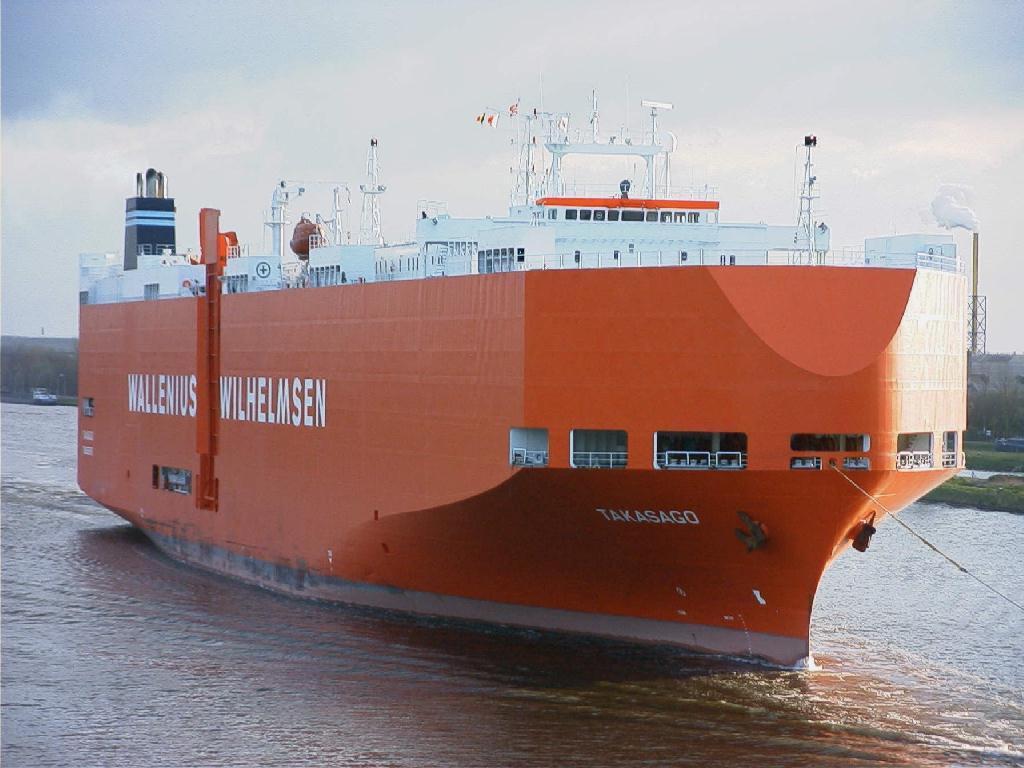
CAR CARRIER MV „TAKASAGO”

CAR CARRIER MV „TAKASAGO”

Customs: A duty or tax on imported goods. These fees are a major bonus to the economy. The Customs Department also works to prevent the importation of illegal drugs and contraband.

Customs Broker: This person prepares the needed documentation for importing goods (just as a freight forwarder does for exports). The broker is licensed by the Treasury Department to clear goods through U.S. Customs. Performs duties related to documentation, cargo clearance, coordination of inland and ocean transportation, dockside inspection of cargo, etc. (Also known as a customhouse broker.)

Deadhead: When a truck returning from a delivery has no return freight on the back haul, it is said to be in deadhead. Equivalent term is ballasting in shipping.

Deck Barge: Transports heavy or oversize cargoes mounted to its top deck instead of inside a hold. Machinery, appliances, project cargoes and even recreational vehicles move on deck barges.

Dock: (verb) – To bring in a vessel to tie up at a wharf berth. (One parks a car, but docks a ship.) (noun) – A dock is a structure built along, or at an angle from, a navigable waterway so that vessels may lie alongside to receive or discharge cargo. Sometimes, the whole wharf is informally called a dock.

Dockage: A charge by a port authority for the length of water frontage used by a vessel tied up at a wharf.

Drayage: Transport by truck for short distances; e.g. from wharf to warehouse..

Dredge: (noun) A waterborne machine that removes unwanted silt accumulations from the bottom of a waterway. (verb) The process of removing sediment from harbor or river bottoms for safety purposes and to allow for deeper vessels.

Duty: A government tax on imported merchandise.

Electronic Data Interchange (EDI): The exchange of information through an electronic format. Electronic commerce has been under intensive development in the transportation industry to achieve a competitive advantage in international markets.

Elevator: A complex including storage facilities, computerized loading; inspection rooms and docks to load and unload dry bulk cargo such as grain or green coffee.

Export Packers: Firms that securely pack export products into a container to crate to protect the cargo from damage during an ocean voyage.

Feeder Service: Ocean transport system involving use of centralized ports to assemble and disseminate cargo to and from ports within a geographic area. Commodities are transported between major ports, then transferred to feeder vessels for further transport to a number of additional ports.

Fender Piles: The wooden or plastic pilings on the outer edge of the wharf function like the fenders on a car. They are there to absorb the shock of a ship as it docks at the wharf and to protect the structural pilings that actually support the wharf. Fender piles are also called sacrifice piles since they are designed to be discarded after they are broken.

Fleeting: The area at which barges, towboats and tugs are berthed until needed. The operation of building or dismantling barge tows.

Foreign Trade Zone (FTZ) – Known in some countries as a free zone, a foreign trade zone (FTZ) is a site within the USA (in or near a U.S. Customs port of entry) where foreign and domestic goods are held until they ready to be released into international commerce. If the final product is imported into the U.S., duties and taxes are not due until the goods are release into the U.S. market. Merchandise may enter a FTZ without a formal Customs entry or the payment of Customs duties or government excise taxes. In the zone, goods may be: stored; tested; sampled; repackaged or relabeled; cleaned; combined with other products; repaired or assembled, etc.

Freight: Merchandise hauled by transportation lines.

Freight forwarder: An individual or company that prepares the documentation and coordinates the movement and storage of export cargoes. See also Customs house broker.

Containers Onboard (Image source: Courtesy of Hapag Lloyd)

Containers Onboard (Image source: Courtesy of Hapag Lloyd)

Gantry Crane: Track-mounted, shoreside crane utilized in the loading and unloading of breakbulk cargo, containers and heavy lift cargo.

General Cargo: Consists of both containerized and breakbulk goods, in contrast to bulk cargo. See: breakbulk, container, bulk, dry bulk). General cargo operations produce more jobs than bulk handling.

Grain elevator: Facility at which bulk grain is unloaded, weighed, cleaned, blended and exported.

Harbor: A port of haven where ships may anchor.

Heavy Hauler: A truck equipped to transport unusually heavy cargoes (steel slabs, bulldozers, transformers, boats, heavy machinery, etc.)

Heavy Lift: Very heavy cargoes that require specialized equipment to move the products to and from ship/truck/rail/barge and terminals. This “heavy lift” machinery may be installed aboard a ship designed just for such transport. Shore cranes, floating cranes and lift trucks may also adapted for such heavy lifts.

Home Port: Port from which a cruise ship loads passengers and begins its itinerary, and to which it returns to disembark passengers upon conclusion of voyage. Sometimes referred to as “embarkation port” and “turn around port.”

Hopper Car: A freight car used for handling dry bulks, with an openable top and one or more openings on the bottom through which the cargo is dumped.

Hostler (or Hustler): A tractor, usually unlicensed, for moving containers within a yard. An employees who drives a tractor for the purpose of moving cargo within a container yard.

Interchange: Point of entry/exit for trucks delivering and picking up containerized cargo. Point where pickups and deposits of containers in storage area or yard are assigned.

I.L.A. – International Longshoremen’s Association, which operates on the East and Gulf Coasts. See labor unions and longshoremen.

I.L.W.U.– International Longshore and Warehouse Union, which operates on the West Coast. See labor unions and longshoremen.

Intermodal Shipment: When more than one mode of transportation is used to ship cargo from origin to destination, it is called intermodal transportation. For example, boxes of hot sauce from Louisiana are stuffed into metal boxes called containers at the factory. That container is put onto a truck chassis (or a railroad flat car) and moved to a port. There the container is lifted off the vehicle and lifted onto a ship. At the receiving port, the process is reversed. Intermodal transportation uses few laborers and speeds up the delivery time.

IMX: This is transportation shorthand for intermodal exchange. In an IMX yard, containers can be lifted from truck chassis to rail intermodal cars or vice versa.

ISO: International Organization for Standardization. Worldwide organization formed to promote development of standards to facilitate the international carriage and exchange of goods and services. Governs construction specifications for ISO containers.

JIT: The abbreviation for “just in time,” which is a way to minimize warehousing costs by having cargo shipped to arrive just in time for its use. This inventory control method depends on extremely reliable transportation.

Labor Union: An organization of workers formed to serve members’ collective interests with regard to wages and working conditions. The maritime unions within ports can include locals of the larger union, such as the General Longshore Workers; Clerks and Checkers; Sack-sewers, Sweepers, Water boys and Coopers; Dock Loaders and Unloaders of Freight Cars and Barges; Dray Clerks, Weighers and Samplers; plus the Seafarer’s International Union; the National Maritime Union; the Marine Engineers’ Beneficial Association and the Teamsters. Some laborers don’t belong to a union.

Landlord Port: At a landlord port, the port authority builds the wharves, which it then rents or leases to a terminal operator (usually a stevedoring company). The operator invests in cargo-handling equipment (forklifts, cranes, etc), hires longshore laborers to operate such lift machinery and negotiates contracts with ocean carriers (steamship services) to handle the unloading and loading of ship cargoes. (See also: operating port.)

LASH: These 900-foot-long ships carry small barges inside the vessel. LASH stands for Lighter Aboard Ship. Just as cargo is transported by barge from the shallower parts of the Mississippi River to the Port of New Orleans for export aboard ocean-going ships, LASH barges are lifted into these unusual ships. Overseas, the ship can discharge clusters of barges in the open waters. Then several towboats will assemble the barges into tows bound for various ports and inland waterways, without the ship having to spend time traveling to each port.

Launch Service: Companies that offer “water-taxi” service to ships at anchor.

LCL: The acronym for “less than container load.” It refers to a partial container load that is usually consolidated with other goods to fill a container.

Length Overall (LOA): Linear measurement of a vessel from bow to stern.

Lift On-Lift Off (LO/LO): Cargo handling technique involving transfer of commodities to and from the ship using shoreside cranes or ship’s gear.

LTL: Means a shipment that is “less than truckload”. Cargoes from different sources are usually consolidated to save costs.

Longshoremen: Dock workers who load and unload ships, or perform administrative tasks associated with the loading or unloading of cargo. They may or may not be members of labor unions. Longshore gangs are hired by stevedoring firms to work the ships. Longshoremen are also called stevedores.

Manifest: The ship captain’s list of individual goods that make up the ship’s cargo.

Marine Surveyor: Person who inspects a ship hull or its cargo for damage or quality.

Master: The officer in charge of the ship. “Captain” is a courtesy title often given to a master.

Maritime: (adjective) Located on or near the sea. Commerce or navigation by sea. The maritime industry includes people working for transportation (ship, rail, truck and towboat/barge) companies, freight forwarders and customs brokers; stevedoring companies; labor unions; chandlers; warehouses; ship building and repair firms; importers/exporters; pilot associations, etc.

Marshaling Yard: This is a container parking lot, or any open area where containers are stored in a precise order according to the ship loading plan. Containers terminals may use a grounded or wheeled layout. If the cargo box is placed directly on the ground, it is called a grounded operation. If the box is on a chassis/trailer, it is a wheeled operation.

Mean Low Water (MLW): Lowest average level water reaches on an outgoing tide.

Mean High Water (MHW): Highest average level water reaches on an outgoing tide.

Mooring Dolphin: A cluster of pilings to which a boat or barge ties up.

Motor Ship (MS) or Motor Vessel (MV): A ship propelled by internal-combustion engines.

Neo-bulk Cargo: Uniformly packaged goods, such as wood pulp bales, which stow as solidly as bulk, but are handled as general cargoes.

Ocean Carrier: Diesel-fueled vessels have replaced the old steamships of the past, although many people still refer to modern diesel ships as steamships. Likewise, the person who represents the ship in port is still often called a steamship agent. (See: steamship agent)

On-dock Rail: Direct shipside rail service. Includes the ability to load and unload containers/breakbulk directly from rail car to vessel.

On-terminal Rail: Rail service and trackage provided by a railroad within a designated terminal area.

Operating Port: At an operational port like Charleston, South Carolina, the port authority builds the wharves, owns the cranes and cargo-handling equipment and hires the labor to move cargo in the sheds and yards. A stevedore hires longshore labor to lift cargo between the ship and the dock, where the port’s laborers pick it up and bring it to the storage site. (See landlord port.)

Pallet: A short wooden, metal or plastic platform on which package cargo is placed, then handled by a forklift truck.

Pier: A structure which just out into a waterway from the shore, for mooring vessels and cargo handling. Sometimes called a finger pier.

Piggyback: A rail transport mode where a loaded truck trailer is shipped on a rail flatcar.

Pilot: A licensed navigational guide with thorough knowledge of a particular section of a waterway whose occupation is to steep ships along a coast or into and out of a harbor. Local pilots board the ship to advise the captain and navigator of local navigation conditions (difficult currents; hidden wrecks, etc.).

Port: This term is used both for the harbor area where ships are docked and for the agency (port authority), which administers use of public wharves and port properties.

Port-of-call: Port at which cruise ship makes a stop along its itinerary. Calls may range from five to 24 hours. Sometimes referred to as “transit port” and “destination port.” (See also: home port)
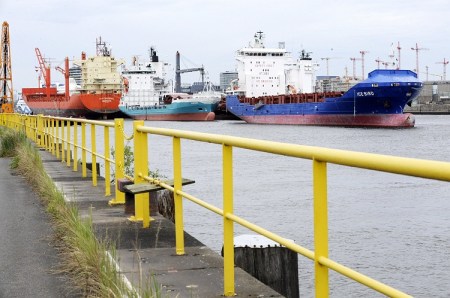
Vessels in the Port of Hamburg

Vessels in the Port of Hamburg

Project Cargo: The materials and equipment to assemble a special project overseas, such as a factory or highway.

Quay: A wharf, which parallels the waterline.

Railhead: End of the railroad line or point in the area of operations at which cargo is loaded and unloaded.

Railyard: A rail terminal at which occur traditional railroad activities for sorting and redistribution of railcars and cargo.

Refrigeration or reefer units: The protective cooling of perishable freight by ice, liquid nitrogen, or mechanical devices

Ro/Ro: Short for roll on/roll/off . A ro/ro ship is designed with ramps that can be lowered to the dock so cars, buses, trucks or other vehicles can drive into the belly of the ship, rather than be lifted aboard. A ro/ro ship, like a container ship, has a quick turnaround time of about 12 hours.

Rubber-Tired Gantry (RTG): Traveling crane used for the movement and positioning of containers in a container field. RTG’s may also be used for loading and unloading containers from rail cars.

Sheddage: Regardless of the length of stay, a vessel is charged a one-time fee for use of shed space and/or marginal (waterside) rail track space. The charge is based on the length of a vessel.

Short Ton: A short ton equals 2,000. Lifting capacity and cargo measurements are designated in short tons.

Spreader: a device for lifting containers by their corner posts. The spreader bar on a container crane is telescopic to allow lifting various length containers.

Steamship: Today, ships that transport cargo overseas are powered by diesel fuel instead of steam. Many people still use the term “steamship,” but the more modern term for the service is “ocean carrier” and for the ship itself, “motor vessel.”

Steamship Agent: The local representative who acts as a liaison among ship owners, local port authorities, terminals and supply/service companies. An agent handles all details for getting the ship into port; having it unloaded and loaded; inspected and out to sea quickly. An agent arranges for pilots; tug services; stevedores; inspections, etc., as well as, seeing that a ship is supplied with food, water, mail, medical services, etc. A steamship agency does not own the ship.

Steamship Company: A business that owns ships that operate in international trade.

Steamship Line: A steamship (ocean carrier) service running on a particular international route. Examples: NSCSA (National Shipping Company of Saudi Arabia), American President Lines (APL), Maersk Sealand, Evergreen, etc.

Stevedores: Labor management companies that provide equipment and hire workers to transfer cargo between ships and docks. Stevedore companies may also serve as terminal operators. The laborers hired by the stevedoring firms are called stevedores or longshoremen.

Straddle Carrier: Container terminal equipment, which is motorized and runs on rubber tires. It can straddle a single row of containers and is primarily used to move containers around the terminal, but also to transport containers to and from the transtainer and load/unload containers from truck chassis.

Stripping: The process of removing cargo from a container.

Stuffing: The process of packing a container with loose cargo prior to inland or ocean shipment.

Tank barges: Used for transporting bulk liquids, such as petroleum, chemicals, molasses, vegetable oils and liquefied gases.

Tariff: Schedule, system of duties imposed by a government on the import/export of goods; also, the charges, rates and rules of a transportation company as listed in published industry tables.

Terminal: The place where cargo is handled is called a terminal (or a wharf).

Terminal Operator: The company that operates cargo handling activities on a wharf . A terminal operator oversees unloading cargo from ship to dock, checking the quantity of cargoes versus the ship’s manifest (list of goods), transferring of the cargo into the shed, checking documents authorizing a trucker to pick up cargo, overseeing the loading/unloading of railroad cars, etc.

Toplift: A piece of equipment similar to a forklift that lifts from above rather than below. Used to handle containers in the storage yard to and from storage stacks, trucks and railcars.

Towboat: A snub-nosed boat with push knees used for pushing barges. A small towboat (called a push boat) may push one or two barges around the harbor. A large towboat is used to push from 5 to 40 barges in a tow is called a line boat. From the Port of New Orleans, line boats deliver cargo to Mid-America via the 14,500-mile waterway system flowing through the Crescent City.

(See also tug boat)

Tractor-Trailer: Some trucks are a solid unit, such as a van, but many have three main units. The front section where the driver sits is called the cab or the tractor (because it pulls a load). Cargo is loaded into the metal box (container), which is loaded onto the wheel base called a chassis or a trailer. These big trucks are often also called 18-wheelers.

Trailer On Flat Car (TOFC): A container placed on a chassis that is in turn placed on a railroad car.

Tramp: A ship operating with no fixed route or published schedule.

Transit Port: When the majority of cargoes moving through a port aren’t coming from or destined for the local market, the port is called a transit (or through) port.

Transit Shed: The shed on a wharf is designed to protect cargoes from weather damage and is used only for short-term storage. Warehouses operated by private firms house goods for longer periods.

Transshipment: The unloading of cargo at a port or point where it is then reloaded, sometimes into another mode of transportation, for transfer to a final destination.

Transtainer: A type of crane used in the handling of containers, which is motorized, mounted on rubber tires and can straddle at least four railway tracks, some up to six, with a lifting capacity of 35 tons for loading and unloading containers to and from railway cards.

Trucks: Heavy automotive vehicles used to transport cargo. In the maritime industry, cargo is often carried by tractor-trailers. The tractor is the front part of the vehicle, also called a cab. The trailer is the detachable wheeled chassis behind the tractor, on which containers or other cargoes are placed. (See: common carrier; heavy hauler; drayage)

Tugboat: Strong v-hull shaped boat used for maneuvering ships into and out of port and to carry supplies. A ship is too powerful to pull up to the wharf on its own. It cuts power and lets the tug nudge it in. Generally barges are pushed by towboats, not tugs.

Twenty Foot Equivalent Unit (TEU): A unit of measurement equal to the space occupied by a standard twenty foot container. Used in stating the capacity of container vessel or storage area. One 40 ft. Container is equal to two TEU’s.

U. S. Army Corps of Engineers: See Corps of Engineers.

U. S. Customs: See Customs.

Vessel: A ship or large boat.

Vessel Operator: A firm that charters vessels for its service requirements, which are handled by their own offices or appointed agents at ports of call. Vessel operators also handle the operation of vessels on behalf of owners.

Warehouse: A place in which goods or merchandise is stored.

Way Bill: The document used to identify the shipper and consignee, present the routing, describe the goods, present the applicable rate, show the weight of the shipment, and make other useful information notations.

Wharf: The place at which ships tie up to unload and load cargo. The wharf typically has front and rear loading docks (aprons), a transit shed, open (unshedded) storage areas, truck bays, and rail tracks.

Wharfage Fee: A charge assessed by a pier or wharf owner for handling incoming or outgoing cargo.

Yard: a system of tracks within a certain area used for making up trains, storing cars, placing cars to be loaded or unloaded, etc.

NB: This glossary has been compiled from many sources, including information from the websites of The Port of New Orleans www.pola.com, Georgia Ports Authority www.gaports.comand the Port of Halifax www.portofhalifax.com.

© 2013 Basil M Karatzas & Karatzas Marine Advisors & Co.  All Rights Reserved.

IMPORTANT DISCLAIMER:  Access to this blog signifies the reader’s irrevocable acceptance of this disclaimer. No part of this blog can be reproduced by any means and under any circumstances, whatsoever, in whole or in part, without proper attribution or the consent of the copyright and trademark holders of this website. Whilst every effort has been made to ensure that information herewithin has been received from sources believed to be reliable and such information is believed to be accurate at the time of publishing, no warranties or assurances whatsoever are made in reference to accuracy or completeness of said information, and no liability whatsoever will be accepted for taking or failing to take any action upon any information contained in any part of this website.  Thank you for the consideration.
S&P, Newbuilding and Demolition Update (December 2nd, 2013)

In a shortened week due to the Thanksgiving Holiday in the USA (there were definitely thanks to give this year in shipping compared to the last couple of years), most indices continued their upward trajectory.  Incoming Federal Bank Chairwoman Janet Yellen is perceived more dovish than outgoing Chairman Bernanke, thus, the ‘risk on’ theme continues. There have been concerns that the underlying economic conditions do not ‘support’ such valuations, but again, private equity funds and institutional investors hold US$ 789 billion in ‘dry powder’, thus, it seems there are no many asset classes or projects that cannot be afforded generous pricing when there are more money than deals.

In the past week, for the first time in a month, there have been no transactions in the VLCC market to report, whether newbuildings, second-hand or demolition. The VLCC freight market has softened for the week, but nothing major to report. Following the sale of the Suezmax tanker MT „TENERIFE SPIRIT” (150,000 dwt, Daewoo, 2000) three weeks ago to Greek buyers (Eurotankers) at $16.3 million, the Suezmax tanker MT „RIO GENOA” (160,000 dwt, Universal, 2007) has been committed from MPC Steamship in Germany to financial buyers in the US at about $35.5 million subject to charter by Koch at about $13,500 pd.   The price seems in line with the ‘market’ to slightly above market, which is OK given the level of the freight markets, and of course one has to look up for the cost basis of such tanker (would be value significantly above $50 million three years ago).  The LR1 tanker MT „ASHLEY SEA” (74,000 dwt, New Century, 2007) was sold to Greek buyers at $25 million, but we understand the creditors had involvement with the transaction and pricing, and the price looks significantly below market.  Staying with bank-related transactions, a bank from the lending syndicate to Denmark’s Torm exercised the option to sell four of their MR tankers to Oaktree Capital Management; the vessels were placed back under Torm’s management; the vessels were MT „TORM ALEXANDRA” (50,000 dwt, GSI, 2010), MT „TORM AGNETTE” (50,000 dwt, GSI, 2010), MT „TORM ARAWA” (53,000 dwt, GSI, 2012) and MT „TORM ANABEL” (2012); pricing is sketchy as this is not really an open market transaction, but it seems that the vessels had $162 million cost basis but sold at $107 mil, the outstanding loans, which loans seem slightly above vessels’ present fair market price.

Panamax Bulker MV „CAROL” (Image source: Halifax Shipping News)

Panamax Bulker MV „CAROL” (Image source: Halifax Shipping News)

The dry bulk market has been more active than the tanker market, and the transaction of the week has been the sale of the panamax bulker MV „CAROL” (75,600 dwt, Mitsui, 1999) at the very strong price of $14.2 million. The vessel was conveniently inspectable at a central port (Hamburg) where we understand there was a line of inspectors waiting for their turn.  As a matter of comparison, we recently reported the sale of a very comparable vessel but two years newer, MV „BOTAFOGO” (76,500 dwt, Imabari, 2001) at $14.6 million, almost same price, and the sale MV „MULBERRY PARIS” (76,500 dwt, Tsuneishi, 2004) at $19.5 million.  The older Japanese panamax bulker MV „BEL EAST” (68,500 dwt, Sasebo, 1995) which was sold at $8.5 million.  The also 1995-built post-panamax bulker MV „HOKURIKU MARU” (94,500 dwt, Mitsubishi Nagasaki, 1995) was sold to Chinese buyers at $9 mil.  In the supramax market, it is understood that Geden Line of Turkey was motivated to sell four (or two according to other sources) vessels to Olympic Shipping at either $100 mil for four (or $50 mil for two); vessels were sisterships MV „SOUTH”, MV „EAST”, MV „WEST” and MV „METROPOL” (55,400 dwt, Hyundai Vinashin, 2012, C4x35t).  The good supramax MV „MAPLE CREEK” (53,500 dwt, Imabari SB, 2005, C4x30t) was sold at $19.5 million on the back of strong buying interest.  Handysize market has been active as well on firm overall pricing: MV „FRAGA” (28,700 dwt, Shin Kochi HI, 2003, C4x30t) was sold at $13 million (noting that the vessel is special survey / dry dock due), the MV „IVS KWAITO” (32,000 dwt, Kanda, 2005) was committed at excess $15 million. MV „TIMOTHY R” (32,500 dwt, Jinse, 2009) was sold at $18.5 million.

For a change, the newbuilding market has been subdued during the past week. The demolition market has also been quiet: fairly decent freight rates with no many determined sales demolition candidates. All along, the major buying markets for demolition vessels are working on their on ‘stabilization’ issues, whether it’s about stabilization of exchange for the Indian Rupee (INR), the recent weakness of the Pakistani Rupee (PKR), and the political unrest and declaration of elections in January 2014 in Bangladesh.

© 2013 Basil M Karatzas & Karatzas Marine Advisors & Co.  All Rights Reserved.

IMPORTANT DISCLAIMER:  Access to this blog signifies the reader’s irrevocable acceptance of this disclaimer. No part of this blog can be reproduced by any means and under any circumstances, whatsoever, in whole or in part, without proper attribution or the consent of the copyright and trademark holders of this website. Whilst every effort has been made to ensure that information herewithin has been received from sources believed to be reliable and such information is believed to be accurate at the time of publishing, no warranties or assurances whatsoever are made in reference to accuracy or completeness of said information, and no liability whatsoever will be accepted for taking or failing to take any action upon any information contained in any part of this website.  Thank you for the consideration.
S&P, Newbuilding and Demolition Update (November 25th, 2013)

A short while ago when shipping was in a real vertigo (let’s say about a year ago when no many asset classes in shipping were making more than $10,000 pd on the spot market), it was euphemistically said that we were living in ‘interesting times’. We just never thought how ‘interesting’ the times could get!

Beauty ...

Beauty …

In the past week, on the back of a recent strong improvement in VLCC rates, it has been reported that entities affiliated with the Marinakis Group in Greece have acquired the 2014-scheduled-delivery VLCC MT „SHANGHAI SPIRIT” (320,000 dwt, SWS, 2014) at just below $90 million. It was reported that several strong buyers had shown serious interest in the Wah Kwong vessel, and thus the strong price. It has been also reported that interests associated with the Scorpio Group have or are about to contract four VLCCs at S Korea’s DSME at prices above $90 million each, with the earliest vessel delivering in Q1 2015. Also, it has been reported that DHT Tankers (DHT has filed on Monday to raise $110 mil from the public markets without specifying yet the use of the proceeds) and Navig8 have or about to have contracted ten VLCCs between them. And, there has been some clarification that the previously conversion-driven sale of the MT „SHINYO NAVIGATOR” (300,000 dwt, Hyundai HI, 1996, 42,448 ldt) was actually a demolition sale at the strong price of $440/ldt ($18.7 mil), just because the market cannot tolerate seventeen-year old VLCCs and their drydock of a few million dollars is not a risk-reward favorable investment. And, if it’s ‘embarrassing’ for seventeen-year-old VLCC heading for the scrap heap, let’s not forget that just two weeks ago the Fredriksen group sold two younger VLCCs for scrap, actually one of them built in 1999 (MT „GOLDEN VICTORY” 300,000 dwt, Hitachi Zosen, 1999.) It’s an interesting market indeed when year-to-date VLCC rates have averaged below $15,000 pd, despite the recent improvement to $50,000 pd, when 15-year-old VLCCs are too old to pass their special survey but there is solid appetite for newbuildings at the $90 million level, implying that with 100% utilization and zero leverage, the vessel has to earn $27,000 pd on average just to recoup the investment.

In the product tanker market, it has been reported that the Greek-controlled LR2 tanker MT „MAKO” (105,000 dwt, Samsung Heavy, 1998) has been sold to Chinese buyers at the in-line-with-the market price of $10.5 million. The two sistership LR1 ice-class 1A tankers MT „PERSEVERANCE” and MT „AFFINITY”  (73,800 dwt, STX, 2005) have been committed at a market related $24.7 million, each to Greek buyers.

In the dry bulk market, there has also been strong buying interest from private owners, notably from Greek private owners and also Asian interests. The Japanese built and evocatively named MV „GRAND DIVA” (76,500 dwt, Imabari, 2007) was sold to Greek buyers at a very respectable $21.5 million, while the comparable vessel MV „MULBERRY PARIS” (76,500 dwt, Tsuneishi, 2004) was acquired at $19.5 million from buyers believed to be from Greece, again. The Japanese-built handysize bulker MV „VENUS OCEAN” (33,500 dwt, Shin Kochi HI, 2013) was sold at a very respectable $22.5 million to private Greek buyers. Overall, the pace for transactions in the dry bulk market has softened recently, which is primarily due to lack of high-quality modern sale candidates, where most of the emphasis has been placed by operating shipowners when there is little relief in debt financing from the banks, at least not yet.

The newbuilding market remains very robust, where besides the VLCC orders mentioned earlier, there have been orders of at least six VLOCs/Newcastlemaxes by Kara Shipping at Beihai Shipyard and Foremost Maritime and Winning Shipping at Nantong Cosco KHI.  Of course there have been a few more orders for smaller dry bulk vessels and also containerships, but who bothers with the little stuff when the big-ticket items draw all the attention?

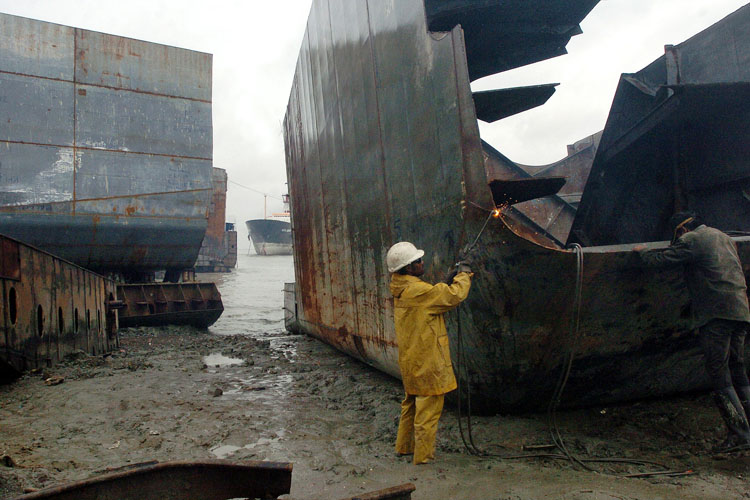
... over age?    (Image source: AFP PHOTO/Farjana Khan GODHULY)

… over age? (Image source: AFP PHOTO/Farjana Khan GODHULY)

In the demolition market, pricing seems to be improving solidly; first, the decent / strong freight markets have made several owners to postpone the inevitable, while the offer of sale of modern, high value vessels like the MT „SHINYO NAVIGATOR” (Pakistan sale) has pushed the market upwards. In the last month, demolition prices in the sub-continent have improved by about 10% as now tankers command about $430/ldt while bulkers range at about the $400/ldt mark.  To the extent that the Reserve Bank of India (RBI) and its recently elected governor Prof Raghuram Rajan manage to stabilize the currency (INR) at 65/US$ or below, there is legitimate hope that the demolition market could move higher, at least in the near term.

Again, who ever said that shipping is not an interesting industry? 

© 2013 Basil M Karatzas & Karatzas Marine Advisors & Co.  All Rights Reserved.

IMPORTANT DISCLAIMER:  Access to this blog signifies the reader’s irrevocable acceptance of this disclaimer. No part of this blog can be reproduced by any means and under any circumstances, whatsoever, in whole or in part, without proper attribution or the consent of the copyright and trademark holders of this website. Whilst every effort has been made to ensure that information herewithin has been received from sources believed to be reliable and such information is believed to be accurate at the time of publishing, no warranties or assurances whatsoever are made in reference to accuracy or completeness of said information, and no liability whatsoever will be accepted for taking or failing to take any action upon any information contained in any part of this website.  Thank you for the consideration.