ADR: American Depository Receipts: The exchange system for trading of foreign shares in the USA.
ADR: Alternate Dispute Resolution. Synonym: arbitration.
Aframax: American Freight Rate Association.
Aframax tanker: A (usually crude oil) tanker ranging in size from 85,000 dwt to 120,000 dwt.
Air Draft (or Air Draught): The distance from the waterline to the highest fixed point of a vessel.
American Bureau of Shipping (ABS): the preeminent US-based, established in 1924 classification society, member of IACS (International Association of Classification Societies).
AMVER: A voluntary global vessel reporting system used by search and rescue authorities in their efforts to provide assistance to persons in distress at sea. The system provides information on vessels located near a reported distress. It was originally known as the Atlantic Merchant Vessel Emergency Reporting (AMVER) System.
Arabian Gulf (AG): Synonyms: Middle East Gulf (MEG); Persian Gulf (PG).
ATDNSHINC: Any Time Day or Night Sundays & Holidays Included.
Automatic Identification System (AIS): A system onboard a ship that continuously transmit the vessel’s identification, position, course, speed as well as other data to other ships and relevant authorities. Synonym: universal automatic identification system (UAIS).
Bale Cubic Capacity: A volume capacity of the cargo hold(s) of a dry cargo vessel. It is usually expressed in ft3 or m3, and it is used to estimate the space available for carrying unitized cargoes such as bales, bags and pallets. Any cargo space that is inaccessible to baled cargo, such as space between frames, are excluded from the bale cubic capacity.
Ballast Leg: A voyage with no cargo on board to get a ship in position for the next loading port or docking. A ballast tank is a tank that is filled with seawater when a vessel is in ballast, in order to ensure stability.
Ballast ratio: Time at sea without cargo as a percentage of total time.
Baltic and International Maritime Council (BIMCO): The world’s largest shipping association representing shipowners, shipbrokers, agents and P&I Clubs. Based in Copenhagen, Denmark.

Professor John Houseman
Baltic Capesize Index (BCI): An index of charter rates for capesize vessels published by the Baltic Exchange in London.
Baltic Clean Tanker Index (BCTI): An index of charter rates for product tankers published by the Baltic Exchange in London.
Baltic Dirty Tanker Index (BDTI): An index of charter rates for crude oil tankers published by the Baltic Exchange in London.
Baltic Dry Index (BDI): An index of the price of transporting major dry bulk raw materials (such as iron ore and coal) by sea. The Baltic Dry Index is published by the Baltic Exchange in London. It combines three Baltic Indexes: the Baltic Handymax Index, the Baltic Panamax Index, and the Baltic Capesize Index.
Baltic Exchange: An independent source of maritime market information for the trading and settlement of physical and derivative contracts. Based in London, the Baltic Exchange can trace its history as far back as 1744.
Baltic International Tanker Routes (BITR): A report on 19 international oil tanker routes published by the Baltic Exchange in London. It makes up the Baltic Dirty Tanker Index and the Baltic Clean Tanker Index.
Baltic Panamax Index (BPI): An index of charter rates for panamax vessels published by the Baltic Exchange in London.
Bareboat charter (BBC): the hiring or leasing of a vessel from one company to another (the charterer), which in turn provides crew, bunkers, stores etc. and pays all operating costs. A charter of a vessel under which the vessel-owner is usually paid a fixed daily or monthly rate for a certain period of time during which the charterer is responsible for the ship operating expenses and voyage expenses of the vessel and for the management of the vessel. In this case, all voyage related costs, including vessel fuel, or bunker, and port dues as well as all vessel operating costs, such as day-to-day operations, maintenance, crewing and insurance are paid by the charterer. A bareboat charter is also known as a “demise charter” or a “time charter by demise” and involves the use of a vessel usually over longer periods of time ranging over several years The owner of the vessel receives monthly charterhire payments on a per day basis and is responsible only for the payment of capital costs related to the vessel.
Barge Carrier: A ship designed for the transportation of barges. Several different designs exist, among them LASH (lighter aboard ship) and SeaBee.
Barging: The transfer of cargo from a ship to a barge or vice versa.
Barrel (bbl): A trading unit used in connection with the production of oil. One barrel equals 42 US gallons or approximately 159 liters.
Bill of Lading (B/L): A document that serves three main functions: (1) a document of title to the goods described in the Bill of Lading; (2) a receipt for the goods; and (3) as evidence of the terms and conditions agreed upon for the transportation of the goods.
Buoy loader: Tanker specially equipped for loading at sea via buoys.
Bulk: Unpackaged solid cargo such as coal, ore and grain.
Bunkers: Fuel oil used to operate a vessel’s engines, generators and boilers. Heavy Fuel Oil (HFO) used to be the primary source of bunkers but nowadays Intermediate Fuel Oil (IFO) and Marine Diesel Oil (MDO) for generators are more prevalent.
IFO: Intermediate Fuel Oil. A type of bunkers.
IFO 180 (Intermediate Fuel Oil, 180 Centistoke): Bunkers with a viscosity (flowability) of 180 Centistoke. The lower the number, the better the quality of the fuel. Synonym: 180 CST.
IFO 380 (Intermediate Fuel Oil, 380 Centistoke): Bunkers with a viscosity (flowability) of 180 Centistoke. The lower the number, the better the quality of the fuel. Synonym: 380 CST.
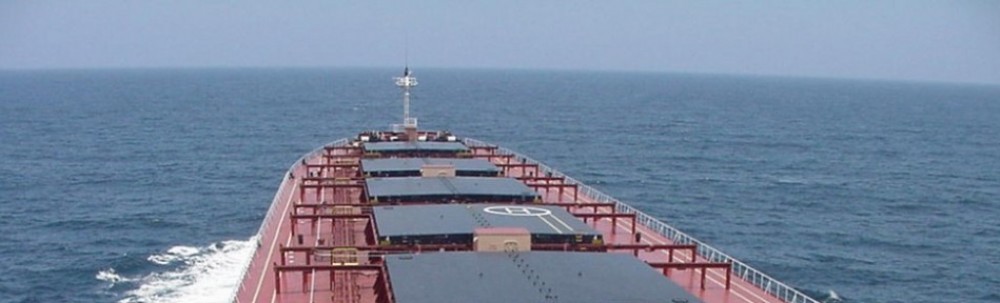
Capesize: Dry cargo bulk carrier vessel usually of greater deadweight capacity than 120,000 dwt or larger; typical size around 180,000 dwt. Named so since such a vessel is usually too large for the Suez Canal and has to circumvent the Cape (of Good Hope, in South Africa). Primary trading in iron ore and coal; occasionally grains.
Car Equivalent Unit (CEU): A measure of the cargo carrying capacity of a ro/ro vessel such Pure Car Carrier (PCC) (please see).
Cargo Manifest: A document listing the cargo of a vessel.
Cellular Container Vessel (FCC): A container vessel fitted with cell guides. Synonym: fully cellular containership.
Certificate of Financial Responsibility (COFR): Certificate required by the US Coast Guard for tonnage transporting oil products in the US economic zone (due to OPA90), to confirm the owner’s financial responsibility up to a specified amount for pollution caused in US waters.
CERCLA: Comprehensive Environmental Response, Compensation and Liability Act.
Charter: The hiring of a vessel, or use of its carrying capacity, for either (1) a specified period of time (time charter) or (2) to carry cargo for a fixed fee from a loading port to a discharging port (voyage charter). The contract for a charter is called a charterparty.
Charter broker: A broker / intermediary with the responsibility of chartering (tanker) vessels by representing either shipowners or cargo interests.
Charterer: The entity that hires a vessel pursuant to the charter. Charterer can be cargo owner or any other person / company who hires a ship.
Charterhire: Money paid to a vessel’s owner by the charterer for the use of a vessel under a time charter or bareboat charter. Payments for timecharters are usually made during the course of the charter every 15 or 30 days in advance or in arrears by multiplying the daily charter rate times the number of days and, under a time charter only, subtracting any time the vessel was deemed to be off-hire. Payments for voyage charters are payable upon the discharge of cargo. Under a bareboat charter such payments are usually made monthly and are calculated on a 360 or 365 day calendar year basis.
Charter-party: Transport contract between shipowner and shipper of goods.
Charter rate: The amount of money agreed between the charterer and the vessel-owner accrued on a daily or monthly basis that is used to calculate the vessel’s charterhire.
Classification society: An independent society that certifies that a vessel has been built and maintained according to the society’s rules for that type of vessel and complies with the applicable rules and regulations of the country in which the vessel is registered, as well as the international conventions which that country has ratified. A vessel that receives its certification is referred to as being “in class” as of the date of issuance. Without valid class certificates, vessels deemed unseaworthy and cannot obtain insurance coverage or allowed to sail. Prominent classification societies are the American Bureau of Shipping (ABS), Bureau Veritas (BV), China Classification Society (CCS), Det Norske Veritas’ (DNV) which recently merged with Germanischer Lloyd (GL), Korean Register of Shipping (KR), Lloyd’s Register of Shipping (LR), Nippon Kaiji Kyokai (ClassNK), Registro Italiano Navale (RINA).
Clean Petroleum Products (CPP): Liquid products refined from crude oil, whose color is less than or equal to 2.5 on the National Petroleum Association scale. Clean products include naphtha, jet fuel, gasoline and diesel/gasoil.
Clinker: An intermediate product used to produce cement. It is produced in cement kilns and consists of dark porous nodules. Synonym: cement clinker.
Commercial Management or Commercially Managed: The management of the employment, or chartering, of a vessel and associated functions, including seeking and negotiating employment for vessels, billing and collecting revenues, issuing voyage instructions, purchasing fuel, and appointing port agents.
Commercial Pool: A commercial pool is a group of similar size and quality vessels with different shipowners that are placed under one administrator or manager. Pools offer participants opportunities for scheduling and other operating efficiencies such as multi-legged charters and Contracts of Affreightment and other operating efficiencies.
Condition Assessment Program (CAP): Voluntary rating system for (usually older) vessels describing and quantifying the standards of a vessel and earning designations of CAP 1 or CAP 2.
ConRo (Vessel): Container / roll on-roll off vessel. A vessel designed to carry containers as well as rolling stock such as passenger cars, trucks, buses and trailers that can be driven or towed on to the vessel. Synonym: container/ro-ro (vessel).
Consecutive Voyage Charter: An agreement for a vessel to undertake a series of consecutive voyages between two ports. The shipowner pays for all voyage costs such as bunkers and port charges.
Container Load: A shipment that is large enough, either by volume or weight, to fill an entire container. The opposite of “container load” is LCL (Less than full Container Load). Synonym: full container load (FCL).

Image Source: The New York Times
Contract of Affreightment: A contract of affreightment, or COA, relates to the carriage of specific quantities of cargo with multiple voyages over the same route and over a specific period of time which usually spans a period of time possibly even a number of years. A COA does not designate the specific vessels or voyage schedules that will transport the cargo, thereby providing both the charterer and ship owner greater operating flexibility than with voyage charters alone. The charterer has the flexibility to determine the individual voyage scheduling at a future date while the ship owner may use different ships to perform these individual voyages. As a result, COAs are mostly entered into by large fleet operators such as pools or ship owners with large fleets of the same vessel type. All of the ship’s operating, voyage and capital costs are borne by the ship owner while the freight rate normally is agreed on a per cargo ton basis.
Combination Carrier: Ship capable of carrying different types of cargo, thereby achieving a more uniform flow of shipments. Typically termed OBO, an abbreviation for oil, bulk, ore, which means that the vessel is designed for cargoes of these and other bulk products. Also, PROBO, Products/Ore/Bulk/Oil carrier, a ship that can carry oil (including petroleum products) or dry bulk cargoes. Combination carriers are almost an obsolete asset class these days as charterers prefer specialization and efficiency (vs. flexibility.)
Crude Oil: Oil in its natural state that has not been refined or altered.
Daily Vessel Operating Expenses (DVOE): The costs of a vessel’s technical operation, crewing and insurance (excluding costs of financing).
Deadweight ton (DWT): A measure expressed in metric tons (1,000 kg) of a ship’s carrying capacity, including bunker oil, fresh water, crew and provisions. A vessel’s dwt or total deadweight is the total weight necessary to submerge the vessel to its maximum permitted draft. This is the most important commercial measure of the capacity.
Demise Charter: An agreement for the hire of a vessel without crew for a period of time. The party that hires the vessel pays for all operating costs like crew, provisions, bunkers, port charges, canal charges and any other costs related to the operation of the vessel. Synonym: Bareboat Charter. In leasing, the equivalent term is the so-called ‘triple net lease’.
Demurrage: Money paid to shipowner by charterer, shipper or receiver for failing to complete loading/discharging within time allowed according to charter-party. Additional revenue paid for delays experienced in loading and/or unloading cargo, which are not deemed to be the responsibility of the shipowner, calculated in accordance with the charterparty.
Dirty Petroleum Products (DPP): Liquid products refined from crude oil, whose color is greater than 2.5 on the National Petroleum Association scale. Dirty products usually require heating during a voyage, because their viscosity or waxiness makes discharge difficult at ambient temperatures.
Dispatch: Remuneration payable by shipowner to charterer, shipper or receiver for loading/discharging in less than the time allowed according to the charter-party.
Double-hull: Hull construction design in which a vessel has an inner and outer side and bottom separated by void space, usually 2 meters in width.
Draft: Vertical distance between the waterline and the bottom of the vessel’s keel, usually the determining factor for entering port by a certain type of vessel.
Dry cargo carrier: A ship carrying general or dry bulk cargo, casually called bulk carrier (BC). Sub-divisions for dry bulk vessels can be Multi-Purpose (MPP), or General Cargo (GC), or Open Hatch or Box Shaped or Log-fitted or Lakers or tween-decker, or heavylift.
Dry Docking (DD): The removal of a vessel from the water for inspection and/or repair of those parts of a vessel which are below the water line. During drydockings, which are required to be carried out periodically, certain mandatory classification society inspections are carried out and relevant certifications issued. Drydockings are generally required once every 30 to 60 months during Special Survey (SSDD) or Intermediate Survey (ISDD).
Dynamic Positioning System (DPS): A system that will maintain a vessel’s exact position without using conventional moorings. The system is based upon satellite navigation technology and a set of computer-controlled propellers.
Dunnage: Wood or other material used in the stowage of cargo. It serves to secure and protect the cargo.
Easy Chemicals: Chemicals that can be carried in so-called coated tanks. Coated tanks are made of steel, and the inside is layered (coated) by a coating such as zinc silicate or epoxy.
ETA: Estimated Time of Arrival.
ETD: Estimated Time of Departure.
Fairplay: A leading, international shipping trade publication.
Forward Freight Agreement (FFA): A financial instrument used as a hedging tool to manage volatility in freight rates. It is a contract between two parties involving an agreed future price for transporting cargo by sea. No real cargo or ships are involved. Synonym: Freight Derivative.
FHEX: Fridays, Holidays, Excepted.
FHINC: Fridays, Holidays, Included.
FiFi or Fi-Fi: Fire Fighting Equipment.
Flag of Convenience (FOC): A ship register in a country that offers incentives to ship owners from other countries to enter their vessels in that particular register. Some incentives often offered are little or no tax liability, no restrictions on the nationality of crew, and low registration fees. The vessel will fly the flag of the country where it is registered. Examples of open registries are Panama and Liberia. Synonym: Open Registry.
Freight Rate: The agreed freight charge calculated by metric tons of cargo or deadweight ton per month (See Worldscale).
Gearless: A vessel without cranes for handling cargo.
Global Maritime Distress and Safety System (GMDSS): An international system that uses terrestrial and satellite technology to provide automated alerting of shore-based rescue authorities, in addition to ships in the vicinity, in the event of a maritime distress situation.
Global Positioning System (GPS): A navigation system based on radio signal transmitted from satellites.
Greenwich Mean Time (GMT): A global standard for time. Synonyms: Universal Time Coordinated (UTC); Zulu time.
G6 Alliance is a consortium of container lines, consisting of Grand Alliance members (Hapag-Lloyd Container Line, Nippon Yusen Kaisha and Orient Overseas Container Line) and New World Alliance (APL, Hyundai Merchant Marine and Mitsui OSK Lines.)
Gross ton: A unit of weight equal to 2,240 pounds.
Hague Rules: A complete set of rules for the carriage of goods by sea. Included in the rules are responsibilities of the carrier. The Hague Rules were amended in 1968, and the amended rules are known as the Hague-Visby Rules.
Hague-Visby Rules: A complete set of rules for the carriage of goods by sea. Included in the rules are responsibilities of the carrier. The Hague-Visby Rules were published in 1968, amending the Hague Rules.
Hamburg Rules: A United Nations Convention on the carriage of goods by sea. The Hamburg Rules came into force on 1st November 1992 amending the Hague-Visby Rules in their entirety.
Hamburg Shipbrokers’ Association (VHSS): The professional association of shipbrokers in Hamburg.
Handymax tanker: A product tanker in approximately the 25,000 dwt to 40,000 dwt size range with internally coated tanks to prevent corrosion and facilitate cleaning when switching between cargoes.
Handysize tanker: A tanker ranging in size from 10,000 dwt to 25,000 dwt.
Hellenic Shipbrokers Association (HSA): The professional association of shipbrokers in Greece.
Hull: Shell or body of a vessel.
Institute of Chartered Shipbrokers (ICS): A London-based professional body of shipbrokers and shipping professionals.
Intermediate survey: The inspection of a vessel by a classification society surveyor which takes place between two and three years before and after each special survey for such vessel pursuant to the rules of international conventions and classification societies.
International Association of Classification Societies (IACS): International association of classification societies whose members are responsible for classifying the world fleet; almost always only IACS classification societies are allowed to classify vessels as per standard industry terms.
International Bulk Chemical Code (IBC Code): A code that is part of the International Convention for the Safety of Life at Sea (SOLAS). It gives standards for the safe transportation of bulk chemicals by sea.
International Maritime Organization (IMO): A United Nations agency that issues international regulations and standards for seaborne transportation.
IMO Type I: A term with basis in the International Bulk Chemical Code (IBC Code). There are three types: IMO Type I, IMO Type II, and IMO Type III. An IMO Type I chemical tanker meets the highest standards and is therefore allowed to transport the most hazardous chemicals.
IMO Type II: A term with basis in the International Bulk Chemical Code (IBC Code). There are three types: IMO Type I, IMO Type II, and IMO Type III. An IMO Type I chemical tanker meets the highest standards and is therefore allowed to transport the most hazardous chemicals.
IMO Type III: A term with basis in the International Bulk Chemical Code (IBC Code). There are three types: IMO Type I, IMO Type II, and IMO Type III. An IMO Type I chemical tanker meets the highest standards and is therefore allowed to transport the most hazardous chemicals.
IMO Number: A unique seven digit number that is assigned to all self propelled, sea-going civilian merchant ships of 100 GT and above.
INTERCARGO (International Association of Dry Cargo Shipowners): A trade association representing the interests of owners, operators and managers of dry cargo vessels.
International Safety Management Code (ISM Code) for the Safe Operation of Ships and for Pollution Prevention, which, among other things, requires vessel-owners to obtain a safety management certification for each vessel they manage.
International Security Code for Ports and Ships (ISPS Code), which enacts measures to detect and prevent security threats to vessels and ports.
INTERTANKO: The International Association of Independent Tanker Owners.
Jones Act: A common name for the United States Merchant Marine Act of 1920. This act requires that all vessels being used to transport cargo and passengers between ports in the United States (US) are registered in the US and fly the American flag, are owned by US citizens, built at US shipyards and manned by crews who are US Citizens.
Knot: A measure of the speed of the vessel. 1 knot = 1 nautical mile per hour, that is 1,85 km/h.
Kommanditgesellschaft (KG): A limited partnership in Germany. Often used for shipping investments.
Kommanditselskap (KS): A limited partnership in Norway. Often used for shipping investments.
Laker: A vessel designed for trading between the lakeside ports on the Great Lakes of North America.
Liquefied Petroleum Gas (LPG): Petroleum gas (mainly propane and butane) in a liquid form. It is obtained by cooling the gas to about minus 48 degrees Celsius at normal atmospheric pressure.
Liquefied Petroleum Gas Carrier (LPGC): The size of a gas carrier is normally quoted in cubic meters (meters) being the nominal cargo carrying capacity of the vessel.
Livestock Carrier: A vessel designed for the transportation of livestock such as sheep and cattle.
Lloyds’s List: International shipping daily newspaper.
Lloyd’s Open Form (LOF): A contract for the salvage of a vessel and her cargo based on the principle of “no cure no pay”.
Long Ton: One long ton is equal to 2,240 lb or 1,016 kg.
LOOP: Louisiana Offshore Oil Port.

Color Chart by Gerhrad RICHTER (1974)
Lloyd’s Register of Shipping (LR): A pre-eminent, UK-based classification society
LR1 Product Tanker – Long Range 1 Tanker (please see under Product Tanker)
LR2 Product Tanker – Long Range 2 Tanker (please see under Product Tanker)
LR3 Product Tanker – Long Range 3 Tanker (please see under Product Tanker)
Maiden Voyage: The first voyage of a new vessel after the owner has taken delivery from the shipyard that built the vessel.
Malcolm McLean: A shipping and transport industry visionary and pioneer who invented containerization in the 1950s.
Maritime Administration, United States (MARAD): MARAD is part of the Department of Transport.
MARPOL: International Convention for the Prevention of Pollution from Ships, 1973, as modified by the Protocol of 1978 relating thereto, includes regulations aimed at preventing and minimizing pollution from ships by accident and by routine operations.
Master: The Master is in overall command of the ship. He or she is responsible for the safe navigation and operation of the ship at all times. The Master is the ship owner’s representative, and he or she deals with the charterer, port agents and cargo formalities. Synonym: captain.
Memorandum of Agreement (MOA): Agreement for the sale & purchase of a vessel
Metric ton (MT): A unit of weight equal to 1,000 kilograms.
Moonpool: An opening within the hull of a vessel giving access to the water below. A moonpool may be used for many different purposes, depending on vessel type. Some examples are diving, drilling and launching of equipment.
Moss System: LNG containment system based on spherical self-supporting tanks. Today’s market preference has been for GTT’s Mark III Flex System.
Maritime Transportation Security Act (MTSA) of 2002: A set of laws in the United States that are equivalent to the International Ship and Port Facility Security (ISPS) Code. Under the act vessels and port facilities are required to conduct vulnerability assessments and develop security plans.
MR 1 Product Tanker: Medium Range 1 Product Tanker (please see under Product Tanker)
MR 2 Product Tanker: Medium Range 2 Product Tanker (please see under Product Tanker)
Multi-Purpose Container Vessel (MPC): A vessel that can carry containers as well as general cargo.
NAABSA – Not Always Afloat but Safe Aground: A term used to describe the situation at berths where a vessel may touch the bottom of the sea at low tide.
Natural Gas Liquids (NGLs): Liquids obtained during the production of natural gas. These include ethane, propane, butane, and condensate.
Net Revenue / Time Charter (t/c) equivalent – Gross freight income less voyage costs (bunker costs, port duties etc.).
Newbuilding: A new vessel under construction or just completed.
New World Alliance, The (TNWA): A consortium of three container lines: APL, Mitsui O.S.K. Lines (MOL), and Hyundai Merchant Marine Co., Ltd (HMM).
NVO (Non Vessel Owner).
Non-Vessel Operating Common Carrier (NVOCC): A company who buys space from shipping lines and sells it to smaller shippers. The NVOCC issues bills of lading.
Norwegian Sale Form (NSF): Form utilized for the sale & purchase of a vessel; usually NSF 93 is the primary template although NSF 2012 has been introduced. Alternate forms are Nippon Sale Form and Singapore Ship Sale Form 2011.
Norwegian Shipbrokers’ Association, The: The professional association of shipbrokers in Germany.
OBO: Oil/Bulk/Ore carrier (please see Combination Carrier).
Oil Companies International Marine Forum (OCIMF): A voluntary association of oil companies having an interest in the shipment and terminalling of crude oil and oil products.
Off-hire: The period a vessel is unable to perform the services for which it is required under a time charter. Off-hire periods typically include days spent undergoing repairs and drydocking, whether or not scheduled.
Offshore Support Vessel (OSV): A particular group of vessels designed tosupport the offshore oil and gas industry. Specific vessels in this group includes anchor handling tug supply vessel (AHTS), anchor handling tugs (AHT), crew boats and platform supply vessels (PSV).
Oil Pollution Act of 1990 (OPA 90) of the United States (as amended). Federal law imposing regulations on shipowners trading in US waters.
Oil Tanker: Tanker vessel carrying crude oil or refined products. If a ship is equipped to carry several types of cargo simultaneously the ship is called a parcel tanker and usually has cargo tanks lined with special coatings, including possibly cargo tank walls made of stainless steel. A Shuttle Tanker is a tanker carrying oil from offshore fields to terminals. An oil tanker especially built for the transportation of refined oil products, often with inside painted/coated tanks, is called a Product Tanker.
Open Hatch Vessel: A vessel with hatches without overhang, thereby providing better access to the cargo hold.
P3 Network Alliance: A strategic alliance to share east-west routes by Maersk Line, Mediterranean Shipping Company (MSC) and CMA CGM.
Panamax size: Ship between 55,000 dwt and 80,000 dwt, the largest ship capable of navigating in the Panama Canal. The canal is about 80 km (50 miles) long and is made up of three sets of locks and two lakes. The maximum dimensions of a vessel navigating the Panama Canal are: length 294.13 m (965 ft), beam 32.31 m (106 ft), draft 12.04 m (39.5 ft).The term is derived from the maximum breadth capable of passing fully loaded through the Panama Canal. ‘Panamax’ could refer to a dry bulk vessel, a crude oil or product tanker or containership vessel, thus one has to be careful in defining such vessel; when panamax is applied to tankers, usually means crude oil tanker. A ‘panamax containerhip’ is usually of about 4,800 – 5,500 TEU carrying capacity.
Paris MOU: Paris Memorandum of Understanding. An international agreement on port state control (PSC). The Paris MOU consists of 20 participating maritime administrations and covers the waters of the European coastal states and the North Atlantic basin from North America to Europe.
Period charter: A period charter is an industry term referring to both time and bareboat charters. These charters are referred to as period charters or period market charters due to use of the vessel by the charterer over a specific period of time.
Plimsoll Mark: A series of horizontal lines welded on the hull on both sides of a vessel. The lines indicate the limit to which the vessel can safely be loaded, depending on the seasons of the year and whether the vessel is in saltwater or freshwater. Letters indicating the name of the vessel’s classification society are also incorporated into the plimsoll mark. Synonym: load lines.
Port State Control (PSC): The inspection of foreign vessels in national ports to verify that the condition of the vessel complies with the requirements of international regulations and that the vessel is manned and operated in compliance with these rules.
Posidonia: Industry leading international shipping exhibition and conference taking place in Piraeus and Athens, Greece in June on even-numbered years (next Posidonia is in June 2014.)
Post Panamax (Vessel): A ship that is too large to navigate the Panama Canal.
Product tanker: A tanker designed for the carriage of refined petroleum products whose cargo tanks are usually coated with epoxy based paint to facilitate the cleaning of the tanker between the carriage of different cargoes and to prevent product contamination and hull corrosion. A product tanker typically has multiple cargo tanks capable of handling different cargoes simultaneously. The vessel may have equipment designed for the loading and unloading of cargoes with a high viscosity. Typical product tanker sizes:
MR1 (Medium Range 1 Product Tanker): A product tanker in approximately the 20,000 dwt to 40,000 dwt size range with internally coated tanks to prevent corrosion and facilitate cleaning when switching between cargoes.
MR2 (Medium Range 2 Product Tanker): A product tanker in approximately the 40,000 dwt to 55,000 dwt size range with internally coated tanks to prevent corrosion and facilitate cleaning when switching between cargoes.
LR1 (Long Range 1 Product Carrier): A product tanker in approximately the 55,000 dwt to 80,000 dwt size range with internally coated tanks to prevent corrosion and facilitate cleaning when switching between cargoes.
LR2 (Long Range 2 Product Carrier): A product tanker in approximately the 80,000 dwt to 120,000 dwt size range with internally coated tanks to prevent corrosion and facilitate cleaning when switching between cargoes.
LR3 (Long Range 3 Product Carrier): A product tanker in approximately the 120,000 dwt to 150,000 dwt size range with internally coated tanks to prevent corrosion and facilitate cleaning when switching between cargoes.
Protection and indemnity (or P&I) insurance: Insurance obtained through mutual associations (called “Clubs”) formed by vessel owners to provide liability insurance protection against a large financial loss by one member by contribution towards that loss by all members. To a great extent, the risks are reinsured.
Pure Car Carrier (PCC): A ro/ro vessel designed for transporting standard passenger cars.
Pure Car Truck Carrier (PCTC): A ro/ro vessel designed for transporting standard passenger cars, buses and trucks.
Refined Petroleum Products: Refined crude oil products, such as fuel oils, gasoline and jet fuel. Refined petroleum products whose color is less or equal to 2.5 on the National Petroleum Association scale are classified as Clean Petroleum Products and include naphtha, jet fuel, gasoline and diesel / gasoil. Refined petroleum products whose color is greater than 2.5 on the National Petroleum Association scale are defined as Dirty Petroleum Products and usually require heating during their transport due to their viscosity and waxiness that make their discharge difficult at ambient/ temperatures.
Refined oil products can broadly be classified as light distillates, middle distillates, fuel oils or other products:
“Light Distillates” consist of aviation and motor gasoline, and light distillate feedstock;
“Middle Distillates” consist of jet and heating kerosene, and gas and diesel oils;
“Fuel Oils” include marine bunkers and crude oil used directly as fuel; and
“Other Products” include of refinery gas, LPG, solvents, petroleum coke, lubricants etc.
Reefer (Vessel): A vessel designed to carry refrigerated cargo. The vessel’s cargo holds are refrigerated and primary cargoes are meat, fish, vegetable or any other perishable cargo.
SART: Search And Rescue (Radar) Transponder.
SAS: Safety At Sea.
SATPMSHEX: Saturday Afternoons, Sundays, Holidays Excepted.
SATSHEX: Saturdays, Sundays, Holidays Excepted.
SECA — SOx Emission Control Area: A geographical area designated by the IMO as an area where strict controls on sulphur emissions from vessels are required. Specifically, the sulphur content of fuel oil used on board ships must not exceed 1.5%. Alternatively, ships can be fitted with an exhaust gas cleaning system, or use any other technological method to limit Sox emissions. The rules are set out in Marpol Annex VI.
Self-unloader: A bulk carrier that has its own equipment, such as cranes, for unloading of cargo.
Semi-Submersible Rig: A mobile offshore drilling rig consisting of an upper working platform supported by vertical columns connected to lower hull pontoons. The rig can be raised or lowered in the water by altering the amount of water in the pontoons. It is kept in position either by large anchors or by a dynamic positioning system. Abbreviation: SS.
Seismic (Survey) Vessel: A vessel designed for conducting seismic surveys, in search of oil and gas, at sea. The vessel will tow several long cables, called streamers, behind it during a survey.
SHEX: Sundays, Holidays Excepted.
SHINC: Sundays, Holidays Included.
Ship Inspection Report Programme (SIRE Programme): A tanker risk assessment tool introduced by the Oil Companies International Marine Forum (OCIMF). A central part of the tool is a very large database of up-to-date information about tankers.
SHIPMAN 98: A standard agreement for third-party ship management published by BIMCO.
Single Buoy Mooring (SBM): A mooring structure used by tankers to load and unload cargo. Synonym: single point mooring (SPM).
Segregated Ballast Tanks (SBT): Tanks that are only used for ballast with independent pumping and piping systems.
Scrapping: The disposal of old or damaged vessel tonnage by way of sale as scrap metal.
Single-hull: A hull construction design in which a vessel has only one hull.
Sister Ship: Vessels of the same type and specification built by the same shipbuilder in sequence or relative close time proximity.
SOLAS: The International Convention for the Safety of Life at Sea 1974, as amended, adopted under the auspices of the IMO.
Special Survey: An extensive inspection of a vessel by classification society surveyors that must be completed within five years. Special surveys require a vessel to be drydocked.
Spot Charter: A spot charter is an industry term referring to both voyage and trip time charters. These charters are referred to as spot charters or spot market charters due to their short term duration, consisting mostly of a single voyage between one load port and one discharge port.
Spot Market: The market for the immediate chartering of a vessel, usually for single voyages.
Stainless Steel Grade Chemicals: Chemicals that have to be transported in tanks made of stainless steel.
Standards of Training, Certification and Watch-keeping for Seafarers (STCW): A set of conventions developed by the IMO establishing basic requirements on training, certification and watch-keeping for seafarers on an international level.
Strict liability: Liability that is imposed without regard to fault.
Suez Canal: Man-made, navigable waterway, completed in 1869, connecting the Red Sea with the Mediterranean Sea. Vessels up to 164 ft beam and 66 ft draft are allowed to pass through the Canal. Draft usually is the determining factor for allowing passage.
Suezmax tanker: Tanker ranging in size from 120,000 dwt to 200,000 dwt, most usually about 150,000 dwt. The term is derived from the maximum draft capable of passing fully loaded through the Suez Canal.
Shipbroker: A person/company who on behalf of shipowner/shipper negotiates a deal for the transportation of cargo at an agreed price. Shipbrokers are also active when shipping companies negotiate the purchasing and selling of ships, both second-hand tonnage and newbuilding contracts.
Ship Management: The technical administration of a ship, including services like technical operation, maintenance, repair, crewing and insurance.
Spot Market: Short term contracts, normally not longer than three months in duration.
Time Charter (TC): An arrangement whereby a shipowner places a crewed ship at a charterer’s disposal for a certain period. Freight is customarily paid in advance. The charterer also pays for bunker charges, port duties etc.
Tanker: Vessel designed for the carriage of liquid cargoes in bulk with cargo space consisting of many tanks. Tankers carry a variety of liquid cargoes including crude oil, refined petroleum products, liquid chemicals and liquid gases.
Technical Management: The management of the operation of a vessel, including physically maintaining the vessels, maintaining necessary certifications, and supplying necessary stores, spares, and lubricating oils. Responsibilities also generally include selecting, engaging and training crew, and arranging necessary insurance coverage.
Time charter: A time charter is a contract under which a charterer pays a fixed daily hire rate on a semi-monthly or monthly basis for a fixed period of time for use of the vessel. Subject to any restrictions in the charter, the charterer decides the type and quantity of cargo to be carried and the ports of loading and unloading. The charterer pays the voyage related expenses such as fuel, canal tolls, and port charges. The vessel-owner pays all vessel operating costs such as the management expenses and crew costs as well as for the capital costs of the vessel. Any delays at port or during the voyages are the responsibility of the charterer, except for certain specific exceptions such as loss of time arising from vessel breakdown and routine maintenance.
Time Charter Equivalent (TCE) rates: Time charter equivalent, or TCE, rates, are a standard industry measure of the average daily revenue performance of a vessel. The TCE rate achieved on a given voyage is expressed in U.S. dollars/day and is generally calculated by subtracting voyage expenses, including bunkers and port charges, from voyage revenue and dividing the net amount (time charter equivalent revenues) by the number of days in the period.
Ton-Mile Demand: The calculation of the average distance of each trading route multiplied by the volumes moving on that route. A greater increase in long haul movements compared to short haul movements, the higher increase in ton-mile demand.
Ton: 1,000 kilos (metric ton = 2,204 lb).
Trip Time Charter: A trip time charter is a short term time charter where the vessel performs a single voyage between load port(s) and discharge port(s) and the charterer pays a fixed daily hire rate on a semi-monthly basis for use of the vessel. The difference between a trip time charter and a voyage charter is only in the form of payment for use of the vessel and the respective financial responsibilities of the charterer and vessel-owner as described under time charter and voyage charter.
Twenty Foot Equivalent Unit (TEU): A unit of measurement of the cargo carrying capacity of a containership. A standard shipping container is 20 ft long, and therefore equal to one TEU. A 40 ft long shipping container is equal to two TEUs.
Tokyo Memorandum of Understanding (Tokyo MOU): An international agreement on port state control (PSC) in the Asia-Pacific region.
Tonnage Tax: An alternative method of corporate taxation where tax is calculated based on the net tonnage of ships operated rather than on financial profit.
Tramp (Vessel): A vessel operating without a regular schedule. The opposite of tramp is liner.
Ultra Large Crude Carrier (ULCC): A (usually crude oil) tanker whose size is above 320,000 dwt.
Voyage charter: The transportation of cargo from port(s) of loading to port(s) of discharge. Payment is normally per ton of cargo, and the ship owner pays for bunker, port and canal charges etc.
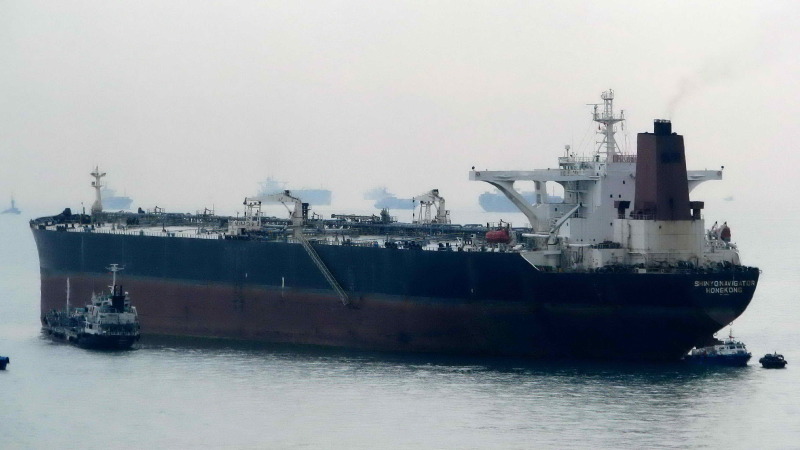
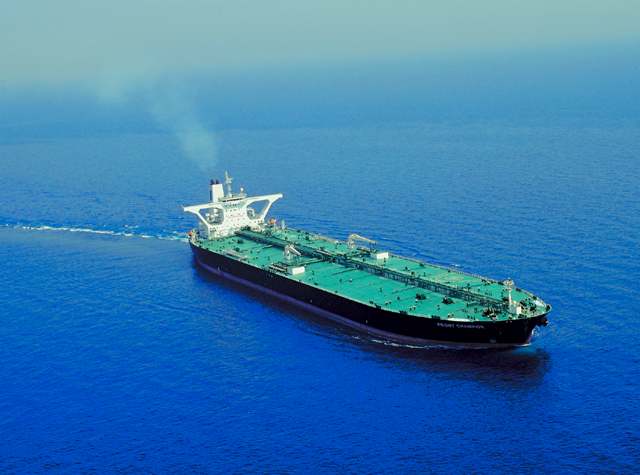
Very Large Crude Carrier (VLCC): A (usually crude oil) tanker whose size is above 200,000 dwt and has a typical cargo capacity of about 320,000 dwt.
Vessel Operating Costs: The costs of operating a vessel that is incurred during a charter, primarily consisting of crew wages and associated costs, insurance premiums, lubricants and spare parts, and repair and maintenance costs. Vessel operating costs exclude fuel and port charges, which are known as “voyage expenses.” For a time charter, the vessel owner pays vessel operating costs. For a bareboat charter, the charterer pays vessel operating costs.
Vessel Response Plan (VRP): A detailed plan of action for responding to a potential oil spill from a vessel in United States waters. The plan has to be submitted to the United States Coast Guard as set out under OPA ’90.
Voyage Charter: A voyage charter involves the carriage of a specific amount and type of cargo from specific load port(s) to specific discharge port(s), subject to various cargo handling terms. Most of these charters are of a single voyage nature between two specific ports, as trading patterns do not encourage round voyage trading. The owner of the vessel receives one payment derived by multiplying the tons of cargo loaded on board by the cost per cargo ton, as agreed to transport that cargo between the specific ports. The owner is responsible for the payment of all expenses including voyage, operating and capital costs of the vessel. The charterer is typically responsible for any delay at the loading or discharging ports.
Voyage expenses: Expenses incurred due to a vessel’s traveling from a loading port to a discharging port, such as fuel (bunker) cost, port expenses, agent’s fees, canal dues and extra war risk insurance, as well as commissions.
Worldscale: Industry name for the Worldwide Tanker Nominal Freight Scale published annually by the Worldscale Association as a rate reference for shipping companies, brokers, and their customers engaged in the bulk shipping of oil in the international markets. Worldscale is a list of calculated rates for specific voyage itineraries for a standard vessel, as defined, using defined voyage cost assumptions such as vessel speed, fuel consumption, and port costs. Actual market rates for voyage charters are usually quoted in terms of a percentage of Worldscale. Worldscale is a table giving the amount of USD per ton oil for a number of standard routes. The rates listed in the table – so called flat rates termed W100 – are revised annually.
© 2013 Basil M Karatzas & Karatzas Marine Advisors & Co. All Rights Reserved.
IMPORTANT DISCLAIMER: Access to this blog signifies the reader’s irrevocable acceptance of this disclaimer. No part of this blog can be reproduced by any means and under any circumstances, whatsoever, in whole or in part, without proper attribution or the consent of the copyright and trademark holders of this website. Whilst every effort has been made to ensure that information herewithin has been received from sources believed to be reliable and believed to be accurate at the time of publishing, no warranties or assurances whatsoever are made in reference to accuracy or completeness of said information, and no liability whatsoever will be accepted for taking or failing to take any action upon any information contained in any part of this website. Thank you for the consideration.







 Karatzas Shipbrokers Register