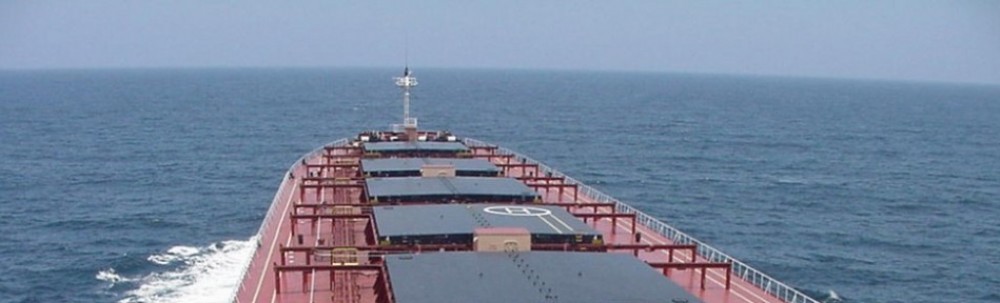
‘Shipshape 10’ News for Week Ending December 18, 2016

‘Shipshape 10 List’, a list of news and articles published in the current week that a senior executive in shipping, shipping finance, commodities, energy, supply chain and infrastructure should had noticed; news and articles that are shaping the agenda and the course of the maritime industry.

Sometimes seemingly tangential, sometimes humorous, occasionally sarcastic, but always insightful and topical.

And, this week’s ‘Shipshape 10’:

It has been an overall slow week, as one would have expected. Just a week before Christmas, freight markets took a breather, especially for the capesize vessels, while sale & purchase activity (S&P) has slowed down, too. In the deal-making world, most people are preoccupied with putting the finishing touches on the deals already on their table and get them signed by the end of the year.

Meanwhile, in what we seemingly call ‘real world’ these days, for shipping finance, as deadlines approach, there are even more concerns about the state of the shipping banks in the future given new regulations and active regulators:

1. Proposed new capital rules threaten struggling shipping sector: bankers (from Reuters)

while all along, European banks have not settled yet with ‘legacy concerns’:

2. UniCredit to Raise $14 Billion, Shed Bad Loans and Cut Jobs in Overhaul (from The Wall Street Journal)

If shipping banks are not functioning and alternative funding is getting tight as well, capital markets seem to spring eternal hope according to the next two articles:

3. Setting Sail (Again) on Wall Street (The Maritime Executive)

Basil M. Karatzas: Ενθαρρυντικά σημάδια για τη ναυτιλία και τις κεφαλαιαγορές

The broader, macro-picture is even murkier than shipping finance as much has been said and postulated recently on trade, trade agreements and possibly tariffs and other trade growth curtailers:

4. An early salvo in a trade war between America and China? (The Economist)

5. The End of Globalism (Foreign Affairs)

However, in the short term, business seem at least decent for now, but again, one has to recall that we are at peak shopping season and in September and October, the containership liner market was shaken by Hanjin’s bankruptcy that pushed backwards deliveries:

6. Cargo Volume Surges at Nation’s Largest Port Complex in November (from the Wall Street Journal)

Staying with the containership liner business, Hyundai Merchant Marine was handled a major setback this week when the company was not accepted as a full member at 2M Alliance and had to settle for cargo slot sharing, etc agreements:

7. Hyundai Merchant Marine Reaches Cargo Agreement With 2M Alliance (from the Wall Street Journal)

AP Moeller Maersk have held their investment day in Copenhagen this past week in a light of a bouncing market that has been playing in the hands of the company with the recent developments instigated from S Korea (HMM, Hanjin, etc) The company is under new leadership of recent, and high expectations of managerial and financial engineering for splitting the business and focusing on the liner business while relegating the energy business to a stand-alone business entity:

8. Maersk’s Rose-Tinted 2017 (from Bloomberg)

Interesting that Maersk’s drive to potentially spin-off the energy business comes on the heels of OPEC agreeing to cut production in order to ‘stabilize’ the market (OK, to increase oil prices).

9. OPEC’s Historic Deal Won’t Be Enough to Drain Oil Stockpiles (from Bloomberg)

img_0721

Talking oil prices at Columbia University’s SIPA with OPEC’s Secretary General H.E. Mohammad Sanusi Barkinko, Center Director Jason Bordoff, CGEP Fellow Adrian Lajous, and Antoine Halff, CGEP Program Director. Image credit: Karatzas Images

At an event this week at Columbia University, School of International and Public Affairs (SIPA), attendees were treated to a detailed account by the OPEC Secretary General H.E. Mohammad Sanusi Barkindo on how the historic OPEC agreement came to pass.

For those in shipping you had an exceptionally good year and think of splurging on something major, the following article on superyacht sales may be of interest:

10. Superyacht Sales Rebound (from Barron’s)

while for those more inclined to spend some holiday spirit in a house by the beach, the following investigative reporting article from The New York Times on private equity may provide some leads on how to make big money in order to splurge on superyachts:

How the Twinkie Made the Superrich Even Richer (from the New York Times)

sunlight_ship_piraeus_dec2016bmk_4041

Always seeing the bright side of things… Image credit: Karatzas Images


© 2013 – present Basil M Karatzas & Karatzas Marine Advisors & Co.  All Rights Reserved.

IMPORTANT DISCLAIMER:  Access to this blog signifies the reader’s irrevocable acceptance of this disclaimer. No part of this blog can be reproduced by any means and under any circumstances, whatsoever, in whole or in part, without proper attribution or the consent of the copyright and trademark holders of this website.Whilst every effort has been made to ensure that information herewithin has been received from sources believed to be reliable and such information is believed to be accurate at the time of publishing, no warranties or assurances whatsoever are made in reference to accuracy or completeness of said information, and no liability whatsoever will be accepted for taking or failing to take any action upon any information contained in any part of this website.  Thank you for the consideration.

‘Shipshape 10’ News for Week Ending December 11, 2016

‘Shipshape 10 List’, a list of news and articles published in the current week that a senior executive in shipping, shipping finance, commodities, energy, supply chain and infrastructure should had noticed; news and articles that are shaping the agenda and the course of the maritime industry.

Sometimes seemingly tangential, sometimes humorous, occasionally sarcastic, but always insightful and topical.

And, this week’s ‘Shipshape 10’:

With the freight markets fairly decent and with the continuous buoyancy of the equity markets, we think the recent news of shipping companies accessing the capital markets has been the most noteworthy and encouraging of all; still, the amounts are small for most practical purposes, but it’s encouraging to see that capital markets are not completely shut for shipping; this week, Seanergy (ticker: SHIP) successfully raised $15 mil which follows on the $14 million Safe Bulkers (ticker: SB) and $72 mil Costamare (ticker: CMRE), $106 million Höegh LNG (ticker: HMLP) and the $100 million the Saverys’ backed Hunter Maritime Acquisition Corp (ticker: HUNTU) in the form of a SPAC (blank check) raised.

1. Seanergy Maritime Holdings Corp. Prices $15 Million Offering (company press release)

Small disclaimer that Karatzas Marine Advisors & Co. has contributed the Industry Section Report for the F-1 filing with the Securities and Exchange Commission (SEC); the F-1 filing can be found here, Form F-1.

Still on the financial front, HSH Nordbank AG has reported taking more than $1 billion provisions for their non-core shipping loan portfolio; sobering developments…

2. HSH preparing for change of ownership ─ net profit € 163 million after nine months (company press release)

No doubt that shipping finance is a tough market; Oaktree has been making yet another approach to shipping, this time by providing credit (lending) to shipowners. It’s another effort to capitalize on the opportunity created by the shipping banks leaving the industry. The news on Splash 24/7:

3. Oaktree develops financing model for smaller owners seeking secondhand bargains (from Splash24/7)

Without trying to toot our own horn, Karatzas Marine Advisors & Co. had written about the business opportunity in the Cayman Financial Review in October 2015, more than one year ago;

Credit funds in the wake of departing shipping banks

On more commercial issues, Iran (Islamic Republic of Iran Shipping Lines and Iranian Offshore Oil Co.) finally entered into the newbuilding market with a decent order of four new-panamax containerships of 14,000-teu and six product tankers; the news of newbuilding orders is disheartening in this market, but again, Iran does have to rebuild their fleet, having remained away from the markets since 2006; interesting to note that the order for the newbuildings is going to Korean and not to Chinese as speculation held that ships-for-oil trade with the Chinese may had offered more value:

4. Iran Shipping Lines Close to $650 Million Korean Order (from the Wall Street Journal)

The markets are completely moribund, and this week’s auction by Mexico for drilling in the Gulf of Mexico drew strong demand, from the usual suspects (ExxonMobil, Chevron and Total), but also by the national Chinese oil company (China National Offshore Oil Corporation (CNOOC):

5. Oil and Gas Industry Leaders Eagerly Take Stakes in Mexican Offshore Fields (from The New York Times)

While often much more attention is paid to shipping and ships, one has to keep in mind that often complimentary businesses may be as enticing as shipping; Dubai-based global ports operator DP World joined forces with Caisse de dépôt et placement du Québec (CDPQ), one of Canada’s biggest pension funds, to create a $3.7 billion vehicle to invest in ports and terminals; individual ships or shipping companies can come and go, sink or sail, but they always need ports to load an discharge, a seemingly lower risk investment in an otherwise volatile industry:

6. DP World Joins Canadian Pension Fund to Create $3.7 Billion Investment Vehicle (from the Wall Street Journal)

While Ontario’s pension fund (Ontario Municipal Employees Retirement System, OMERS) has divested a majority stake in V.Ships, the vessels’ management company; the economics of the transaction were not made public, but likely at a nice return for OMERS since 2011 when they bought the company for $520 million:

7. V.Group Changes Hands (from the Maritime Executive)

while there has been stipulation for the UK to seek a more hands-on approach with the national flag:

8. UK eyes part-privatisation of Ship Register to compete for flags (from the Financial Times)

The timing of the transactions above is interesting however; could this be a headwinds environment for vessel management companies too if growth is to slow down?

9. Get used to it: Economists see “new normal” of slow growth (from the Associated Press)

while the strength of the US dollar causing undue pressures on trade movements

10. Why a strengthening dollar is bad for the world economy (from The Economist)


mv-wuchow-bmk_2143-3

All too familiar picture: pretty ship sitting high in the water. Credit image: Karatzas Images

© 2013 – present Basil M Karatzas & Karatzas Marine Advisors & Co.  All Rights Reserved.

IMPORTANT DISCLAIMER:  Access to this blog signifies the reader’s irrevocable acceptance of this disclaimer. No part of this blog can be reproduced by any means and under any circumstances, whatsoever, in whole or in part, without proper attribution or the consent of the copyright and trademark holders of this website.Whilst every effort has been made to ensure that information herewithin has been received from sources believed to be reliable and such information is believed to be accurate at the time of publishing, no warranties or assurances whatsoever are made in reference to accuracy or completeness of said information, and no liability whatsoever will be accepted for taking or failing to take any action upon any information contained in any part of this website.  Thank you for the consideration.
‘Shipshape 10’ News for Week Ending December 4, 2016

‘Shipshape 10 List’, a list of news and articles published in the current week that a senior executive in shipping, shipping finance, commodities, energy, supply chain and infrastructure should had noticed; news and articles that are shaping the agenda and the course of the maritime industry.

Sometimes seemingly tangential, sometimes humorous, occasionally sarcastic, but always insightful and topical.

And, this week’s ‘Shipshape 10’:

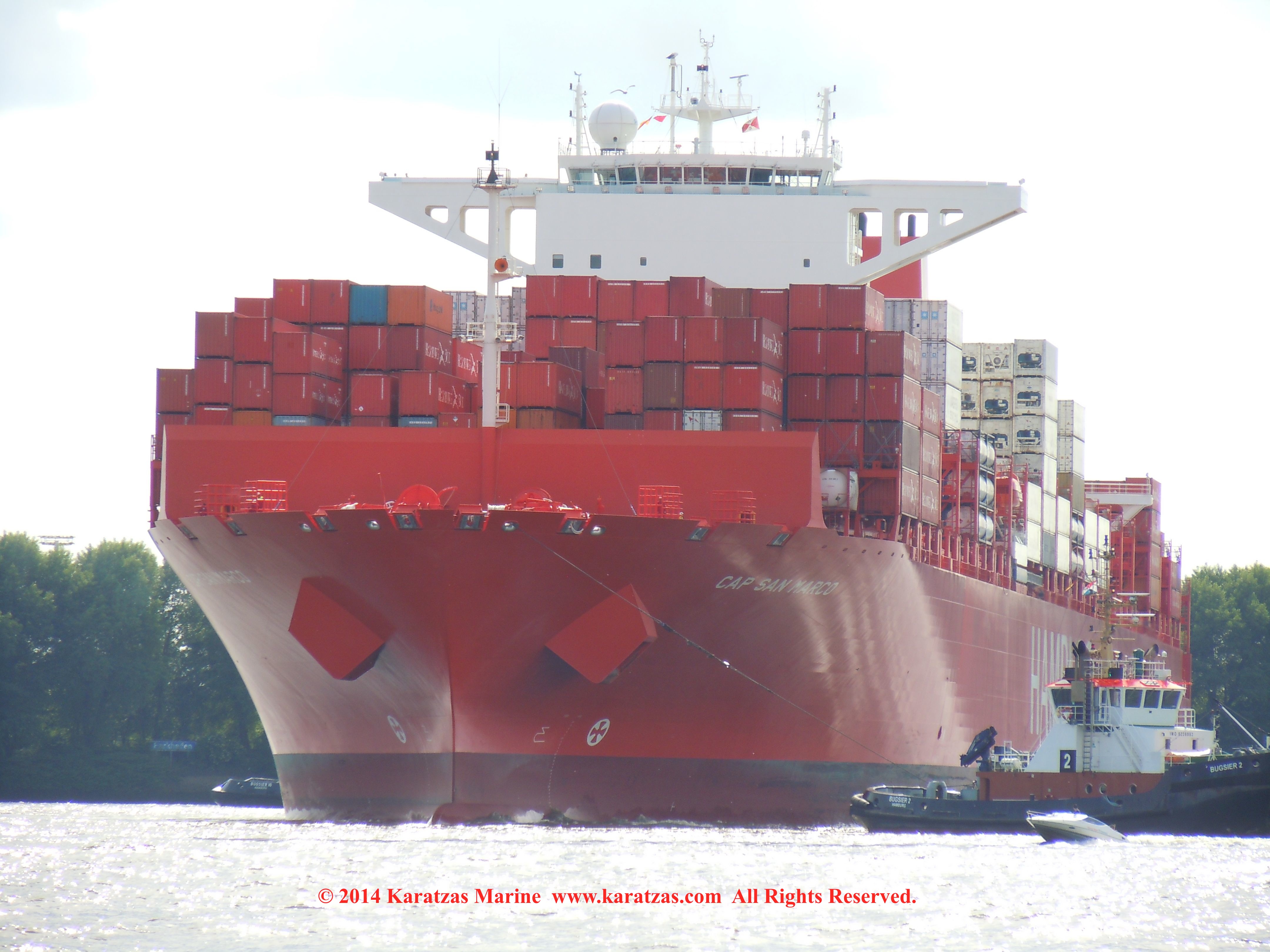
This week’s news predictably has been dominated by Maersk’s acquisition of Hamburg Süd at US$ 4 billion; a couple of years ago, Hamburg Süd had considered a merger of sorts with co-patriot Hapag Lloyd but concerns on pricing and also managerial control had the Oetker family shareholders walk away; some time later, in a new order of priorities, Hamburg Süd sold hook, line and sinker, hooker and exited shipping after 80 years in the business. The price seems a multiple of NAV and of hard assets rather than a multiple of EBITDA and cash flows (although Hamburg Süd being a private company, there is little info to draw upon):

1. Maersk Line to Buy German Shipping Line Hamburg Süd in $4 Billion Deal (from the Wall Street Journal Logistics Report)

Now, much speculation whose hands will be forced to make a move in the rapidly changing seascape of the containership liner business:

2. And then there were 11. Who will follow Hamburg Süd? (from Splash 24/7)

And, also worth reading from the Financial Times:

2A. Asian shipping lines navigate a war of attrition (from the Financial Times)

And, in rather surprising news that rather mud further the waters, the 2M alliance has given Hyundai Merchant Marine (HMM) the cold shoulder for joining the alliance:

3. Ship Alliance Backtracks on Hyundai Merchant Marine Membership (from the Wall Street Journal Logistics Report)

The dry bulk freight market keeps being reasonably strong; lots of sale & purchase (S&P) activity has been reported with many buyers coming out of the woods; some say that this is another sign of a recovering market; in a recent article in Seatrade, Basil M. Karatzas argues that the activity should not be considered a breakout pattern:

4. Is it really the right time to buy ships? (from Seatrade Maritime News)

In the energy world, surprising news with OPEC agreeing to a 10% cut of oil production; the agreement is contingent on several factors and OPEC members are not the best behaved bunch, thus the news has to be taken with a grain of salt; shipping analysts do not seem to agree whether this is a positive or negative net development for the overall shipping industry; such is the world of shipping… No doubt, this is big news if OPEC manages to abide by the agreement:

5. OPEC Confounds Skeptics, Agrees to First Oil Cuts in 8 Years (Bloomberg)

However, the following article can be only be positive for the shipping:

6. Saudi Arabia Becomes Net Fuel Oil Importer (from the Maritime Executive / Reuters)

Staying with macro-economics and the ‘big picture’, a lot has been written about Wilbur L Ross as the leading candidate for Secretary of Commerce under the incoming White House administration; via his firm WL Ross, Mr Ross has been an active distress investor in shipping for crude oil and product tankers, gas tankers and dry bulk vessels. It has been surmised that Mr Ross’ familiarity with the shipping industry, having now access to the highest levels of the government, will act as a catalyst for the industry’s crises; a recent article on Bloomberg reminded the audience that the shipping investments by WL Ross have not been stellar, to say the least, bringing into question whether hopes laden on his person may have to find a port:

7. Wilbur Ross’s Funds Have Posted Mediocre Returns in Last Decade (Bloomberg)

On related news, the nominee for Secretary of Transportation Ms Elaine Chao does have a long interest in the shipping industry via the family business, Foremost Maritime:

8. Trump Picks Elaine Chao for Transportation Secretary (from The New York Times)

In the world of finance, RBS failed their stress test last week; although RBS is not active in shipping anymore, more than US$ 6 billion of RBS shipping loans are up for sale; one has to wonder how, if at all, the latest stress test would affect the development of the shipping loan sale discussions:

9. RBS Must Add $2.5 Billion in Capital After Failing BOE Stress Test (from the Wall Street Journal)

And, also on HSH Nordbank AG:

9A. HSH Nordbank holds meetings with potential buyers: sources (from Reuters)

Princess Cruise Lines, a wholly owned subsidiary of the Carnival Corporation, was fined an eye-popping $40 million after pleading guilty to illegal oily waste discharges in the US:

10. Princess Cruise Lines to Pay Largest-Ever Criminal Penalty for Deliberate Vessel Pollution (United States, Department of Justice, Press Release)

mv-cap-san-marco-9

Hamburg Süd’s post-panamax containership MV ‘CAP SAN MARCO’ entering the Port of Hamburg. Image credit: Karatzas Images


© 2013 – present Basil M Karatzas & Karatzas Marine Advisors & Co.  All Rights Reserved.

IMPORTANT DISCLAIMER:  Access to this blog signifies the reader’s irrevocable acceptance of this disclaimer. No part of this blog can be reproduced by any means and under any circumstances, whatsoever, in whole or in part, without proper attribution or the consent of the copyright and trademark holders of this website.Whilst every effort has been made to ensure that information herewithin has been received from sources believed to be reliable and such information is believed to be accurate at the time of publishing, no warranties or assurances whatsoever are made in reference to accuracy or completeness of said information, and no liability whatsoever will be accepted for taking or failing to take any action upon any information contained in any part of this website.  Thank you for the consideration.

‘Shipshape 10’ News for Week Ending November 27, 2016

‘Shipshape 10 List’, a list of news and articles published in the current week that a senior executive in shipping, shipping finance, commodities, energy, supply chain and infrastructure should had noticed; news and articles that are shaping the agenda and the course of the maritime industry.                                                                                                                                                                                                                               Sometimes seemingly tangential, sometimes humorous, occasionally sarcastic, but always insightful and topical.
                                                                                                                                             And, this week’s ‘Shipshape 10’:                                                                                                                                                                                                                                 The dry bulk market has been having an exceptional time, all things considered, and the Baltic Dry Index (BDI) has almost tripled since February this year when the market established an absolute bottom. Lots of researching whether this is due to a structural recovery or plain seasonality.

1. Dry-Bulk Shipping Owners Get Reprieve as Rates Rebound (from the Wall Street Journal)  

In the containership market, another bleak sign where a seven-year old panamax containership vessel was sold for scrap; less than a decade ago, such vessels were selling for $80 million. A sign of how bad the overall containership market is, and the high asset risk shipowners (and investors) have to undertake:

2. Seven-year-old Rickmers boxship sent for scrap (from Splash 24/7)    

While post-elections in the US has been lots of speculation about the direction of the new administration in terms of trade and infrastructure projects, a couple of articles on the subject:

3. TPP: What is it and why does it matter? (from BBC)

and,

4. China Touts Its Own Trade Pact as U.S.-Backed One Withers (from the Wall Street Journal)

In our last week’s report, we included an article about the Taiwanese government setting up emergency funding for their shipping sector; and, the week before that, another article about the S. Korean government supporting their shipping sector. Now, the Singaporean government falls in line, too, by supporting their offshore sector. Hopefully the Greek shipowners will manage to do without government support, if need be. (“One cannot take from someone who does not own” from the Dialogues of the Dead, Lucian of Samosata, 2nd century BC; cynic philosopher Menippos would not pay a coin (obol) to Charon, the ferryman of Hades of the souls of newly deceased, arguing as above; a very valid argument in today’s Greece, in any case.)

5. Singapore government intervenes to save struggling offshore sector (from Splash 24/7)

However, it’s worth noting that Korea Line Company (KLC), a company that had their own spectacular bankruptcy a few years ago in Korea, now has outbid the favorite Hyundai Merchant Marine (HMM) acquiring Hanjin Shipping’s container business; strangely, Korea Line never before had an exposure to or experience with the containership business. Having a previously bankrupt company rehabilitated and growing would seem to be the forces of capitalism at their best:

6. Why is Korea Line buying Hanjin Shipping’s Asia – US container business? (from Seatrade)

However, HMM who was poised to join the 2M Alliance (A.P. Moeller Maersk and MSC), now has been rejected by 2M; for sure, the containership liner industry is in the middle of major re-alignments in a market that keeps looking gloomy:

7. 2M Alliance rejects HMM (from the Korea Times)                                                        

Another week, and another shipping bank has to break some more bad news. NordLB in the news with additional provisions for their shipping loan portfolio:

8. NordLB warns on €1bn loss for year as shipping loans bite (from the Financial Times)

However, the capital markets show signs of thawing for shipping ideas, at least selectively. The Saverys family managed to raise $100 million for their Special Purpose Acquisition Vehicle (SPAC) for acquiring distressed shipping assets (ticker: HUNTU):

9. Hunters with a big warchest for dry bulk shipping (from Seatrade)

Some thoughts about shipping, mostly positive, ‘thankful’ thinking, in the spirit of the season:

10. A Thanksgiving for shipping (from Splash 24/7)

sounion-16-bmk_9055

A majestic sunset. Image credit: Karatzas Images


© 2013 – present Basil M Karatzas & Karatzas Marine Advisors & Co.  All Rights Reserved.

IMPORTANT DISCLAIMER:  Access to this blog signifies the reader’s irrevocable acceptance of this disclaimer. No part of this blog can be reproduced by any means and under any circumstances, whatsoever, in whole or in part, without proper attribution or the consent of the copyright and trademark holders of this website.Whilst every effort has been made to ensure that information herewithin has been received from sources believed to be reliable and such information is believed to be accurate at the time of publishing, no warranties or assurances whatsoever are made in reference to accuracy or completeness of said information, and no liability whatsoever will be accepted for taking or failing to take any action upon any information contained in any part of this website.  Thank you for the consideration.

‘Shipshape 10’ News for Week Ending November 20, 2016

‘Shipshape 10 List’, a list of news and articles published in the current week that a senior executive in shipping, shipping finance, commodities, energy, supply chain and infrastructure should had noticed; news and articles that are shaping the agenda and the course of the maritime industry.

Sometimes seemingly tangential, sometimes humorous, occasionally sarcastic, but always insightful and topical.

And, this week’s ‘Shipshape 10’:

While most of the past week has been consumed by stipulations on what a Trump administration would mean for the shipping industry,

1. Varsler shippinghavari (from Dagens Næringsliv),

and whether a y-u-g-e infrastructure stimulus package may be what the dry bulk market needed, shipping shares for a couple of days behaved as in the good old days of 2008, almost a lifetime ago:

2. Unmoored From Reality: DryShips Halted After 1,500% Post-Election Rally (from the Wall Street Journal)

and

3. What to Do With a Stock Up 1,000% in One Week? (from Barron’s)

Nothing fundamental actually besides distorted markets and covering ‘short squeeze’, but impressive and nostalgic headlines nevertheless, we have to admit; for real life headlines, another shipping enterprise sponsored by an iconic name of the shipping universe has been making headlines that more accurately reflect reality:

4. Rickmers Maritime says unable to show it will remain in business (from the Straits Times)

Dry bulk freight rates have improved a lot in the last month, and the BDI is up almost four-fold since its bottom in February 2016; really an impressive performance, but is this a sign that the market is turning around and that the present rally is not just another seasonal improvement? Time will tell, but it’s worth mentioning that the Chinese currency is presently at eight-year low, and given than storage costs for commodities such as iron ore and coal is low, probably it makes sense to hold onto commodities than unto fiat money, especially with all the political uncertainty worldwide:

5. Yuan Slides to Lowest Level in Nearly Eight Years (from The Wall Street Journal)

While new trading outposts are established even at remote corners of our planet:

6. As Trump talks wall, China builds bridges to Latin America (from the Associated Press),

and

7. Pakistani PM welcomes first large Chinese shipment to Gwadar port (from Reuters)

If marine engines is a sign for the shipping industry’s direction, Rolls-Royce’s announcement for the week gives additional color on market recovery:

8. Rolls-Royce May Close More Marine Sites as Cost Cuts Deepen (from Bloomberg)

A major piece of news that will be affecting the tanker market (crude and gas) and the Jones Act market for decades to come, there has been another tremendous discovery of another field in Texas, further solidifying the state’s nickname as the ‘Texarabia’ of the US:

9. Vast shale oil field in Texas could yield 20 billion barrels (from the Associated Press)

In the interim, another government is bowing to pressure and committing $1.9 billion dollars to help domestic shipping companies, this time in Taiwan; as a quick reminder for those with short memory, just two weeks ago, the S Korean government had allocated $9.6 billion to assist the local shipping industry (shipbuilders and shipping companies). After almost two decades in the shipping industry, we got to appreciate the industry from a special point of view: most of the vessels in the world fly ‘open registry flags’ and pay tax on tonnage (but not on income); for the few shipping companies that pay tax, it seems they get the extra option of getting bailed out when times are bad.

10. Taiwan Approves $1.9 Billion Aid Package to Troubled Shipping Companies (from the Wall Street Journal Logistics Report)

And, our bonus feature, a few editorial thoughts “What Will Save The Shipping Industry? Nine Industry Thought Leaders Weigh In” (from #Shipping2030)


img_2313

Shipping is an ancient art… Image credit: Karatzas Images


© 2013 – present Basil M Karatzas & Karatzas Marine Advisors & Co.  All Rights Reserved.

IMPORTANT DISCLAIMER:  Access to this blog signifies the reader’s irrevocable acceptance of this disclaimer. No part of this blog can be reproduced by any means and under any circumstances, whatsoever, in whole or in part, without proper attribution or the consent of the copyright and trademark holders of this website.Whilst every effort has been made to ensure that information herewithin has been received from sources believed to be reliable and such information is believed to be accurate at the time of publishing, no warranties or assurances whatsoever are made in reference to accuracy or completeness of said information, and no liability whatsoever will be accepted for taking or failing to take any action upon any information contained in any part of this website.  Thank you for the consideration.