‘Shipshape 10’ News for Week Ending November 6, 2016

‘Shipshape 10 List’, a list of news and articles published in the current week that a senior executive in shipping, shipping finance, commodities, energy, supply chain and infrastructure should had noticed; news and articles that are shaping the agenda and the course of the maritime industry.

Sometimes seemingly tangential, sometimes humorous, occasionally sarcastic, but always insightful and topical.

And, this week’s ‘Shipshape 10’:

1. The week started with a blockbuster announcement of the three largest Japanese container line companies (NYK, K Line and Mitsui O.S.K Line) where effectively creating a new, bigger business entity in order to compete in a bigger world of falling rates in the containership line business alone.
Japan’s Largest Shipping Firms to Merge Container Operations (The Wall Street Journal, Logistics Report)

2. The story of consolidation in the containership liner business kept going strong as on Friday, the Wall Street Journal broke the news that Israel’s ZIM has put themselves up for sale. The company really does not have critical mass or competitive advantages or the financial capacity to grow big alone in this now monster market. Zim has been one of the candidates to be absorbed and frequently mentioned in the ever growing game of shipping companies that will not live to see the next business cycle – not at least in their present form.
Israel’s Zim Looking to Sell Most Global Shipping Operations (The Wall Street Journal, Logistics Report)

3. If there’s need for evidence of the bad state of the containership market, this week it was reported that another young panamax containership was sold for scrap. When this class of ships started getting built were costing well in excess of $80 mil; now selling for scrap at $5 mil; even for the lucky vessels that had managed to secure long –term sky-high charter rates in the good days, it’s doubtful whether the investors saw their money back.
The 4,923 teu YM Los Angeles sets new boxship scrapping records (Splash24/7)

4. While demolition represents the strongest hope for a market recovery at present and under current circumstances, there are concerns that the cleansing powers of scrapping for shrinking tonnage often are exaggerated.
Holy scrap! (Splash 24/7)

5. And, as a reminder of the dangers in shipping and also un-predictabilities, a major explosion will scrapping an offshore storage tanker took place in Gadani, Pakistan, where a reported thirty workers lost their lives in the burning inferno that ensued for several days. We mourn the loss of life, even for a country where life seems to have little substance. From a commercial standpoint, the Pakistani scrap market has effectively closed for several months, which will drive prices for scrapping vessels lower and would decelerate the pace of vessel demolitions.
Dire safety conditions revealed in wake of Gadani fire as death toll feared to surpass 100 (Splash 24/7)                                                                                                                                                                     
6. Speaking of explosions, a Colonial petroleum products pipeline accidental breach in Alabama, the second in two months, has stopped the movement of petroleum products from the US Gulf to the New York area. There had been high hopes that the accident will boost the moribund tanker petroleum trades, both for Jones Act and international flag assets, but the impact from the closing of the pipeline seems to be manageable for now.
What Happens When the Most Important Pipeline in the U.S. Explodes (Bloomberg)

7. Volatility is high in shipping, everybody knows; however, volatility in related industries and markets is not much lower, and as reminder, one of the best investments this year has been the price of coal, whether thermal (mostly) or metallurgical coal. Some think that a bouncing commodities market would bring better fortunes to shipping too.
Coal Surge Leaves China Grappling With Runaway Market It Started (Bloomberg)

8. The Jones Act and offshore market in the US keep deteriorating, and a week after Tidewater formally mentioning the words ‘Chapter 11’ in their latest press release, now Hornbeck announced that they will be idling 80% of their offshore fleet.
Hornbeck to Stack Nearly 80 Percent of OSV Fleet (The Maritime Executive)

9. Reading such news about the state of the market, private equity funds keep moving aggressively in the space, and KKR, one the of the most active investors in shipping this year, have announced bigger plans for growth in the European markets via their Pillarstone platform.
Pillarstone to Snap Up Europe Shipping Loans (The Maritime Executive)                                                                                                                                                              
10. And, for those arguing that monetary policy alone is not sufficient for a market recovery and governments worldwide should be more active with investment, mostly in infrastructure, an article from Japan investigates the policy for the Japanese Coast Guard’s aging fleet. Possibly, at a time when ‘Shipshape 10’ News for Week Ending November 6, 2016, possibly a strategy to renew aging vessels could be stimulating in more than one way.
Many coast guard vessels operating past service limit (The Japan Times)                                                                                                                                                            

mv-zim-piraeus_dsc_1172

Containership MV ‘Zim Piraeus’ entering majestically the New York Harbor with the World Trade Center in the background. Image credit: Karatzas Images


© 2013-2015 Basil M Karatzas & Karatzas Marine Advisors & Co.  All Rights Reserved.

IMPORTANT DISCLAIMER:  Access to this blog signifies the reader’s irrevocable acceptance of this disclaimer. No part of this blog can be reproduced by any means and under any circumstances, whatsoever, in whole or in part, without proper attribution or the consent of the copyright and trademark holders of this website.Whilst every effort has been made to ensure that information herewithin has been received from sources believed to be reliable and such information is believed to be accurate at the time of publishing, no warranties or assurances whatsoever are made in reference to accuracy or completeness of said information, and no liability whatsoever will be accepted for taking or failing to take any action upon any information contained in any part of this website.  Thank you for the consideration.

Tanker Sale & Purchase (S&P) Update

In an effort to be more efficient and focused, from now we will report on this blog only pertinent transactions per market segment and asset class for s&p (sale & purchase market) that have occurred in the last couple of weeks. Transactions and transaction details in shipping are never as transparent and clear-cut as many an analyst or an appraiser may wish to think; having the benefit of time-lapse and fact-checking, we believe that reporting more accurately sales vs reporting them prompter is of greater service to our readership. Also, our reporting will be more structured by market segment and asset class going forward. Transactions will be purely reported herewith; commentary on market conditions and trends, discussion on transactions and developments and their significance will be posted at our sistership blog, Shipping Finance by Karatzas Marine.

Please feel free to subscribe!

As always, shipbrokerage and shipping finance advisory is provide by our sponsor company, Karatzas Marine Advisors & Co.


Despite the softening of tanker freight rates in the last two weeks, one has to be humbly impressed by the performance of the tanker sector over the last twelve months, and accept that volatility in the shipping industry is hard to accurately model: VLCC spot rates (the group most volatile but with the easiest-models-to-build of the tanker market) have moved from $33,000 pd this time last year to above the $60,000 pd mark on several occasions in January, March and May this year, flirted teasingly with the $90,000 pd mark three weeks ago, and now have come full circle to appr. $34,000 pd. It has been a great market of sorts, definitely in comparative terms to dry bulk and containership markets, but still, some people have been worrying whether the structural recovery of the sector is still intact: the demolition pace has slowed down, newbuilding activity has increased, but still the time lapse of the deliveries (about a two-year-delay) does not seem to provide much comfort or confidence: tanker stock prices have not outperformed the broad market, to put it liberally, and most of the tanker stocks trade barely at or below NAV at the very best (the implied valuation of their tankers-on-the-water), while tanker IPO hopefuls waiting in the wings, and waiting… and tanker vessel prices really have not justified the buy-low-sell-high asset play strategy of many a shipowner.

The sale and purchase market has quieted down in the last two weeks, partially due to peak vacation season and also due to the chilling effect of a deflating tanker freight market. Besides the rather un-inspiring prices achieved, several of the sales have been controlled by financial investors, including private equity funds. The involvement of private equity funds with shipping has drawn much attention and we have written on the topic in the past; however, seeing York Capital, Wayzata Investments and Apollo, among others, selling vessels – and not shares at IPOs as per original game plan, and sales of vessels in a ‘hot’ market and at prices that do not seem to come remotely close to highly advertised double-digit expected returns of the private equity…but again, barely a week passes with funds folding due to poor performance because of commodities, currencies, emerging markets…at least, shipping has not sunk a fund yet, at least formally.

In the VLCC market, Tufton Oceanic has disposed of MT ‘Sasa’ (300,000 dwt, Hitachi Zosen, 2001) at $40.5 mil to Russian buyers, while Windsor Petroleum has sold to US-based Ridgebury Tankers four sistership vessels at a value-oriented price of $150 mil for the package: MT ‘British Purpose’, MT ‘Progress’, MT ‘Pride’ and MT ‘Pioneer’ (all ca. 305,000 dwt, Samsung Heavy Industries, 2000/2000/2000/1999).

MT PRINCIMAR AMERICAS 10

House-flag in the news… Karatzas Photographie Maritime

The Suezmax market has been more active in the last month, reflecting a more fragmented market but also a stronger freight market. The transaction that stood out was the sale of the Veritable fleet by Principal Maritime, which had been sponsored and funded by Apollo; one set of six sisterships built at Samsung Heavy Industries MT ‘Princimar Courage’, MT ‘Princimar Pride’, MT ‘Princimar Integrity’, MT ‘Princimar Grace’, MT ‘Princimar Hope’ and MT ‘Princimar Promise’ (158,000 dwt, Samsung H.I., 2013 / 2012 / 2012 / 2011 / 2011 / 2011, respectively), one set of two-chinese sisterships built in 2010, MT ‘Princimar Joy’ and MT ‘Princimar Strength’ (156,000, Rongsheng, 2010), one set of Japanese built sisterships MT ‘Princimar Confidence’ and MT ‘Princimar Loyalty’ (150,000 dwt, Universal, 2006) and two one-off Korean vessels, MT ‘Princimar Truth’ (160,000 dwt, Hyundai Samho, 2007) and MT ‘Princimar Faith’ (160,000, Daewoo (DSME), 2005) at $662 mil, with payment mostly in cash but also $50 mil in stock. There are several angles to see this transaction since it is estimated that the sellers realized more than $100 mil loss from the sale (estimated cost basis of ca. $770 mil), and also that the sale price was NOT the highest in this auction-like sale transaction. The company has attempted for an IPO late last year but there was not sufficient demand / pricing to proceed then, but it’s to be debated whether demand would had been enough for an IPO now in an allegedly much stronger market, at least as much as freight is concerned. Russian tanker company Sovcomflot has sold their 2003-built Suezmax tanker MT ‘SCF Valdai’ (159,000 dwt, Hyundai Heavy, 2003) to Greek buyers at $35.5 mil. Vintage Suezmax tanker MT ‘Front Glory’ (149,500 dwt, Mitsui Shipbuilding, 1995) was sold by the Fredrisken Group to Far East buyers at $16 mil, almost twice her present scrap value (21,733 ldt). Similarly aged Suezmax tankers (with shuttle-tanker conversion) MT ‘Mattea’ (127,000 dwt, Samsung Heavy, 1997) was sold at $11 mil to undisclosed buyers, rumored Greeks, and MT ‘Kometik’ (126,500 dwt, Samsung Heavy, 1997) was sold at $8 mil to Andromeda Shipping in Monaco. Sisterships MT ‘Cape Bata’ and MT ‘Cape Bowen’ (160,000 dwt, Samsung Heavy, 2003) were sold by KG-funds in Germany to Tufton Oceanic in the UK at appr. $33 mil, each.

MT CAPE BRASILIA 4

A calm tanker market… Karatzas Photographie Maritime.

The aframax tanker market has been rather subdued with the exception of a financial transaction for eight coated LR2 tankers by Navig8 to Chinese buyers at $300 mil; given that there is bareboat back for ten years to sellers / Navig8 little can be said for the below-market ‘sale price’ which can be attributed to the Chinese pedigree of the vessels or Navig8’s persisting rumors abut being able to fund their capex gap for their newbuilding program; vessels were: N/B CSSC Offshore Marine Guangzhou H-057 to H-061 and Hulls H-067 and H-068 (112,000 dwt, CSSC Offshore Marine Guangzhou, 2016/2017); vessels names are MT ‘Navig Gallantry’, MT ‘Navig8 Gauntlet’, MT ’Navig8 Goal’, MT ‘Navig8 Grace’, MT ‘Navig8 Gratitude’, MT ‘Navig8 Guard’, MT ‘Navig8 Guide’ and MT ‘Navig8 Gladiator’. Buyers / lessors are affiliated with the shipbuilding group.

In the MR2 tanker market, a couple of interesting transaction with sellers based in the landlocked Upper Midwest in the USA: Wayzata Investment Partners have sold two product tankers MT ‘Halstead Bay’ (51,000 dwt, SLS Shipbuilding, 2007) at $23 million and MT ‘Maxwell Bay’ (51,000, Guangzhou SY Intl, 2013) at $30 mil, to Torm in Denmark. CarVal Investors have sold sisterships MT ‘Harbour Star’ and MT ‘Super Star’ (51,000 dwt, STX SB (Jinhae), 2008) to Target Marine in Greece at $24.5 mil, each. Tankerska Next Generation has sold two 2015 resales at SPP at $38.5 mil, each to Cardiff Marine in Greece (SPP Hull 079/080, SPP, 2015). York Capital in the US has sold their interest in Hyundai Mipo Hull 2473 (51,000 dwt, HMD, 2015) at $37.5 mil to Scorpio Tankers. Finally, Eletson Corporation of Greece has sold vintage tankers MT ‘Kandilousa’ and MT ‘Serifos’ (46,700 dwt, HHI, 1995) at $8.5 mil.

Overall, the market has not been as busy as it seems with most of the transactions being of ‘corporate’ matters instead of the traditional s&p (sale & purchase). Whether there is no strong conviction from operating buyers to step up on buying or lack of capital constrain their buying appetite, financial players seem to be getting ever more obvious; not as much as with buying, but selling is welcome news as well.


© 2013-2015 Basil M Karatzas & Karatzas Marine Advisors & Co.  All Rights Reserved.

IMPORTANT DISCLAIMER:  Access to this blog signifies the reader’s irrevocable acceptance of this disclaimer. No part of this blog can be reproduced by any means and under any circumstances, whatsoever, in whole or in part, without proper attribution or the consent of the copyright and trademark holders of this website.Whilst every effort has been made to ensure that information herewithin has been received from sources believed to be reliable and such information is believed to be accurate at the time of publishing, no warranties or assurances whatsoever are made in reference to accuracy or completeness of said information, and no liability whatsoever will be accepted for taking or failing to take any action upon any information contained in any part of this website.  Thank you for the consideration.


Dry Bulk Sale & Purchase (S&P) Update

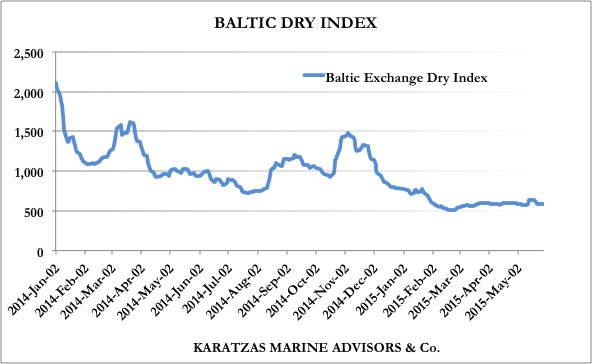
The Baltic Dry Index (BDI) established a 30yr low point in February this year; actually the lowest reading of the index ever. Since then, the market has been bouncing along the bottom with a very anemic improvement to show since then. There are concerns that the industry has entered a long-term phase of malaise with chronic oversupply of tonnage; certain trends point to such direction such as massive orders by cargo interests and end users building up their own fleets (i.e. Cosco, Vale, etc) that will make life for independent dry bulk owners difficult, or at the very least ‘shave the market peaks’. China is done for now with their exponential growth of their market as they try to position their economy towards services and focus on a more equal distribution of wealth that can assure social peace. There also have been structural shifts in the markets associated with shipping, such as replacement of coal with natural gas for electricity and power generation; at present the trend against coal is so bad that it seems coal is becoming a ‘four letter word’ as investors, institutions and sovereign funds are competing for the fastest exit from the industry; for sure, natural gas will need also shipping but not on dry bulk vessels; and the coal trade as almost as big as iron ore at almost 1.2 bln tonnes of coal expected to be transported this year vs. 1.5 bln tonnes of iron ore, based on data by Karatzas Marine Advisors & Co.

2015 06JUN_BDI Graph

Baltic Dry Index: not a day at the beach, regrettably! (Karatzas Marine Advisors & Co.)

Most institutional investors and shipping banks have turned their backs on the dry bulk market, at least for now; thus, there is extremely limited liquidity, which further compounds the downward pressure on dry bulk asset pricing that are inflicted by the weak freight market. The main sources of financing for dry bulk projects today are from the capital markets (selectively available and often at a substantial discount; $SALT’s secondary offering at 30% discount is a clear example of a fallen angel) or with sweat equity and own equity. Independent shipowners and sweat equity have their own capital limitations and likely to opt for older tonnage at rock-bottom pricing, mostly looking for vessels older than 15yrs of age at about scrap pricing; if one has access to cargo or charterers or niche markets, buying a vintage bulker at scrap is not a bad investment proposition: for a few million dollars (small amounts in absolute terms that can be afforded by individual investors) and with minimal capital at risk (premium over scrap), if a buyer can squeeze a few year’s of economic life out of cigarette-butt (think of Benn Graham and Warren Buffett), what can go wrong? And, if the market unexpectedly recovers, these buyers will have hit the jackpot. The access to capital accurately reflects the market dynamics and asset pricing, as big, cash-rich, prime buyers go for beaten-down prices of modern, top quality tonnage, while small, cash-rich owners with access to cargo go for bottom-fishing; thus, there is relative demand from buyers on the opposing ends of the spectrum while demand is sagging for middle-aged vessels; for those involved with volatility analysis and option trading, what’s happening in the dry bulk market reminds of a so-called ‘volatility smile’.

Activity in the dry bulk market is ebbing and flowing, but mostly ebbing as most buyers are taking their sweet time before make any decisions, to buy at all, and if so, at what price. Since asset prices are low and most of the market really is focused on older and cheap tonnage, sale & purchase commissions often are laughable, putting pressure on many smaller brokerage houses.

In the capesize market, Scorpio Bulkers (ticker: SALT) has been continuing their selective divestment of assets in an effort to fill the funding gap for their massive newbuilding program (along with their discounted pricing of secondary offerings as announced earlier this week for 133,000,000 shares of common stock at $1.50 per share; the stock was trading well above $2.20/share at the time of the announcement). In early April, Scorpio has sold three units of capesize bulkers at $44 mil each (2015/2016 deliveries of 180,000 dwt tonnage at Daewoo-Mangalia, MV ‘SBI Churchill’, MV ‘SBI Perfecto’ and MV ‘SBI Presidente’) while this week it has been reported that additional sales took place at $41 mil each, indicating an 8% drop in asset pricing in approximately two months (MV ‘SBI Corona’, MV ‘SBI Estupendo’ and MV ‘SBI Diadema’, 180,000 dwt, 2016, Shanghai Waigaoqiao/China). Approximately one month ago, the still modern cape MV ‘Blue Everest’ (180,000 dwt, 2010, Daehan) was sold at $27 mil, and the older MV ‘Jiang Jun Shan’ (177,000 dwt, 2006, Namura) was sold at $18.2 million. Most market reports have a standardized 5yr-old cape at $30 mil ($29.2 mil as per the Baltic Exchange Sale & Purchase Assessment Index (BSPA)), while just one year ago, such number was pushing the $50 mil mark ($49.08 mil as per BSPA); this is a monumental illustration is value destruction, where $20 mil per vessel has evaporated into thin air, a 40% drop. Few people could have envisioned such a market decline (at least not us, we have to confess), but for professional asset managers, institutional investors, portfolio managers, private equity funds and shipowners on roadshows pounding the table about the market getting this so wrong is a humbling example to watch and wonder.

In the panamax market, MV ‘Navios Esperanza’ (75,000 dwt, Universal S.B., 2007) was sold to $14 mil with her intermediate survey due. Interestingly, MV ‘F.D. Jacques Fraubart’ (76,500 dwt, Imabari S.B. Marugame, 2007) was sold less than six months ago at $19 mil, indicating the magnitude of the asset declines in this sector; presuming appr. $1 mil for the cost of the intermediate survey, this sale represents more than 25% decline in less than six months. The sale of the MV ‘Navios Esperanza’ however is in line with present market given than two weeks ago MV ‘Lowlands Queen’ (76,500 dwt, Imabari S.B. Marugame, 2008) was sold at $15 mil. Decade-old tonnage in this segment has just been decimated as recently the Japanese-built MV ‘Million Trader’ (76,500 dwt, Tsuneishi Zosen, 2004) was sold for appr. $9.5 mil; given that the salvage value of the vessel is $4.5 mil in the present market, she’s Japanese-built and her remaining economic life is more than ten years (fifteen actually remaining years as far design life is concerned), it is hard to see how this can be a bad investment, negative cash flows in the immediate future notwithstanding. And, the market is so terrible for pricing panamax bulkers of this vintage that actually the sale of MV ‘Million Trader I’ (76,000 dwt, Tsuneishi Zosen, 2006) at $12 mil in early May was actually considered at ‘overpriced’ territory by one prospect buyer. Similar and tonnage and pricing, MV ‘Medi Sinagpore’ (75,500 dwt, Universal S.B., 2006) was sold for $12.8 mil while the slightly older MV ‘Rose Atlantic’ (75,500 dwt, Sanoyas, 2005) at $11.0 mil. As a matter of comparison, this time last year, the consensus estimate for a 5yr old panamax bulkers was standing at $26 mil ($26.9 mil as per BSPA index), while now the market stands at appr. $17 mil ($16.4 mil as per BSPA), representing an impressive 40% drop in asset prices.

In the ultramax / supramax market, Norden A/S has disposed of two 60,000 dwt Ultramax newbuildings at Oshima Shipbuilding for delivery in Q4-2015 and Q1-2016 for a price in the region of $25m each (N/B RESALE HULL 10781 / 10782, Oshima Shipbuilding, 2015/2016); EastMed of Greece has been reported as buyers. Similarly sized tonnage but older, MV ‘Nord Liberty’ (58,750 dwt, Tsuneishi Cebu, 2008, 4x30T cranes) was sold to Sea World Management for a price region $12.5 mil. The lightly newer MV ‘Hudson Trader II’ less than a month ago (58,00 dwt, Tsuneishi Zhoushan, 2009) had achieved a more respectable $14.2 mil. From Nisshin Shpg.Co.Ltd. Again, as a matter of comparison, BSPA for a modern surpramax was standing at $25.8 mil this time last year and only at $15.46 mil at present; as painful as it has been, supramaxes / ultramaxes / handymaxes have been another great way of value destruction since last year.

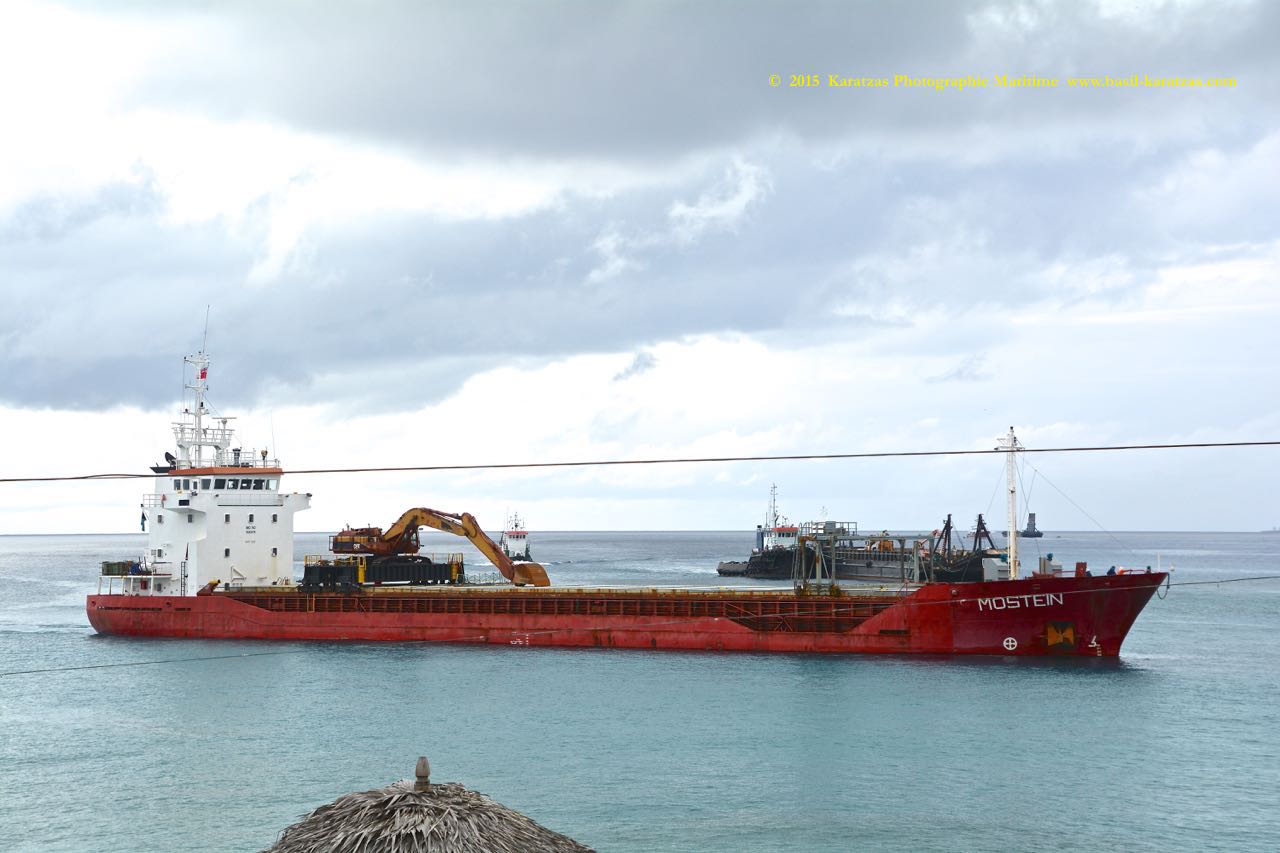
MV MONSTEIN 6

Wishing that all waters in shipping were so clear to read! (Image source: Karatzas Photographie Maritime)

While dry bulk asset prices have dropped substantially over the last year, the consensus is that is the ‘glass is half empty’, still. There many reasons to think so, given still the outstanding orderbook to be delivered, excess shipbuilding capacity, low interest rates and excess liquidity for certain markets, mentions of additional credit lines for export credit from China, and lots and lots of dry powder from institutional investors that can move the market at any given point. On the other hand, as we outlined in a recent post, smart money are getting a second look on certain types of vessels in the dry bulk market. Prices are low enough to be tempting, despite negative cash flows in the near term that will have to be ‘added’ to any purchase price; however, delays in deliveries are negotiated each day from buyers, newbuilding orders have stopped – to the delight and surprise of many a shipowner, charterers have gone on a limp to stay away from the period market and delay as much as possible their chartering requirements. There are some smart money that have start thinking that most of the bad news have been priced in the market and, at least in the near future, any surprises likely to have a positive effect on the market. Maybe it’s time to start seeing the dry bulk glass as half-full.


© 2013-2015 Basil M Karatzas & Karatzas Marine Advisors & Co.  All Rights Reserved.

IMPORTANT DISCLAIMER:  Access to this blog signifies the reader’s irrevocable acceptance of this disclaimer. No part of this blog can be reproduced by any means and under any circumstances, whatsoever, in whole or in part, without proper attribution or the consent of the copyright and trademark holders of this website.Whilst every effort has been made to ensure that information herewithin has been received from sources believed to be reliable and such information is believed to be accurate at the time of publishing, no warranties or assurances whatsoever are made in reference to accuracy or completeness of said information, and no liability whatsoever will be accepted for taking or failing to take any action upon any information contained in any part of this website.  Thank you for the consideration.

S&P, Newbuilding and Demolition Update (December 24th, 2014) – Dry Bulk Market Focus

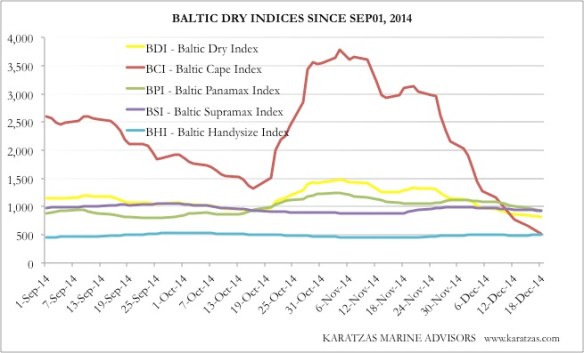
Since our last report at the end of September, the overall dry bulk market has dropped by more than 25%; however, when the decline is seen from the interim peak in early of November at 1,484 points to the present reading of 788 points, for the BDI, the index been cut in half (Graph 1).
Baltic Indices since SEP2014_Graph 1

Graph 1: Baltic Dry Indices since September 1st, 2014; (data source: The Baltic Exchange)

The capesize market as always has been the most volatile component of the BDI index, and it has been on a free fall from the top of 3,781 points on Nov 4th to 474 points on Christmas’ Eve, equating to less than $5,000 pd in terms of freight rates. Looking back, it was in late fall 2013 when the capesize index was trading at comparably high levels (as high as 4,500 points on an occasion), but 2014 has not been a good year for the dry bulk market overall. The performance of the dry bulk market in 2014 got many market players by surprise, as the consensus thinking had been that the market had found bottom in 2011 and 2012, and since then the trend was expected to be upwardly leading, only the degree of the positively sloping line was a matter of debate. The performance of the dry bulk market has been having a major impact on market activity, both directly and indirectly. For starters, cash flows have been at or below operating levels, thus dry bulk owners have been bleeding cash from running their dry bulk vessels, which obviously is not a good result. Further, given that dry bulk vessel ownership is much wider-ly spread (than let’s say tanker vessel ownership), the pain of negative cash flows is widely felt, affecting many, many owners in absolute terms, financially; and when the cash register of a great deal of owners bleeds cash collectively, momentum and attitude are negatively impacted, thus turning the mood of the overall market sour. Again, the consensus thinking has been that 2014 ought to be a good year and many players had placed accordingly ‘long bets’, thus the negative performance has an amplifying effect on a wide range of prospects from newbuilding orders placed on the assumption of an asset play game (surprisingly, no financing in place for many of these speculative orders) to companies having prepared for IPOs and access to the capital markets, to private equity (PE) funds expecting on building a positive track record with an eye to a quick and profitable exit strategy.
Baltic Indices since JAN2013_Graph 2

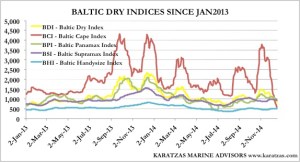
Graph 2: Baltic Dry Indices since January 2013; (data source: The Baltic Exchange)

The dry bulk index started the year in an active way with the tailwinds of last year, and until the middle of spring 2014 (Graph 2), the prospects were looking up; by partying time at Posidonia in June in Greece, the dry bulk market was more than a couple of months in decline; however, owners having built cash reserves during a strong 2013, were holding high hopes and were thinking of bridging the seasonally weak early summer and start trading strongly at the end of the summer. The summer came and left, the fall came and left, and the year came and left, and still no rally to be seen. No predominant cause for the failure to appear for the market rally, but pointers abound: a) for once, world economic growth prospects have been getting revised lower, from the Japanese economy entering recession and the European economy flirting with one too, b) the Chinese economy downshifting seriously on the back of calls for clean air (i.e. burning less coal) and cleaner business policies (i.e. going hard after corruption and self-dealing) and lowering inventories, c) new or stricter export requirements of commodities by several countries (grains in Argentina, mineral export duties in Jakarta) and neutral shipping trends despite a bumper crop harvest in the US, while d) vessel supply kept increasing (approximately 620 dry bulk vessels were delivered in 2014 y-t-d, 320 were scrapped in the same period for a net increase of more than 3% on a world fleet of about 10,000 dry bulk vessels at the beginning of the year).

Despite the fact that hope springs eternal in shipping, dry bulk asset prices has been shifting lower as well. Financing is still hard to find for most shipowners and with freight rates low, potential buyers want to see compelling opportunities to get enticed to open their wallet. In our business practice, we often see buyers’ typical reaction to proposed sale candidate vessels: “the market is at $X mil as per ‘last done’ for this vessel and we would never buy at market, but we would consider offering at market less 5-10%”, which approach has been chipping lower on prices from previously done price levels. While earlier in the year prices were moving in tandem for modern and older dry bulk vessels (usually, independent and smaller owners buy ‘older’ vessels and shipowners with access to the capital market prefer modern tonnage, as a rule of thumb), as of recent, there is a bifurcation in the market as modern vessels have been holding better their prices while ‘older’ vessels have seen a more pronounced drop in asset pricing. It’s hard to pinpoint the widening of the gap between older and modern tonnage, but access to funding and capital markets (where also fees are much higher, and also where there is the need of ‘deal pressure’ and also the need to ‘feed the beast’) may partially explain the price differential. A partial explanation may also be attributed to the strength of the US Dollar (and / or the weakness of the Japanese Yen) which have made the sale of Japanese-controlled vessels more palatable – and, indeed, we have seen more Japanese controlled tonnage for sale in the secondary market in the last few months.

In the capesize market, we have recently seen the sale by Daichi Chuo of MV ‘First Eagle’ (170,000 dwt, 2010, Imabari Shipbuilding) at approximately $41 million to Chinese buyers. In middle November, Daiichi Chuo again disposed of another larger-sized bulker MV ‘First Ibis’ (180,000 dwt, 201, Universal S.B.) at $45 mil to same buyers, clearly indicating that the price of ‘First Eagle’ is a meaning step-down in pricing, after adjusting for size. As a matter of comparison, Daiichi Chuo again sold another capesize vessel in April this year, MV ‘Shanganfirst Era’ (181,000 dwt, Koyo Dock K.K, 2010) at approximately $54 mil to Greek buyers (Golden Union), which makes clear the asset pricing trend between spring and fall this year. Just recently, publicly listed Diana Shipping announced the acquisition of a 2015-built vessel at $50 mil (Hull No BC18.0-51, 180,000 dwt, Beihai Shipyard, 2015); interestingly, Diana also announced this week in a press release the chartering of one of their 2010-built capesize vessels MV ‘New York’ (177,000 dwt, SWS, 2010) to Clearlake for a period of 14-18 months at $12,850 pd less 5% commissions – it would seem that there is still a big disconnect between asset pricing and freight market, unless there is strong conviction for a market recovery. Back in November, Alpha Tankers and Freighters of Greece acquired from Lauritzen Bulkers the vessel MV ‘Cassiopeia Bulker’ (180,000 dwt, Hanjin H.I., 2011) at approximately $42 mil, while at around the same time financially oriented CarVal Investors acquired MV ‘Mineral Manila’ (180,000 dwt, HHIC-Phil., 2011) at $43 million from Bocimar. As an indication of the present market bifurcation, Turkish interests acquired MV ‘Pacific Triangle’ (185,000 dwt, Samsung, 2000) at close to $17 mil, approximately $5 mil premium over scrap price for a vessel likely to have 5+ years remaining economic life.

The panamax dry bulk market has been experiencing a tough cycle, with very weak rates and many existential questions of the optimal size of a ‘panamax’ vessel in our modern world. In any event, just this week, publicly listed Scorpio Bulkers announced the sale of 81,000 dwt vessel at $30.5 mil to Vita Management in Greece (Hull No 164, Tsuneishi Zhoushan, 2015) – incidentally, this week also Scorpio Bulkers announced the scuttling of a six-vessel capesize order (for the newbuilding orders to be converted for coated aframaxes to be sold to sistership company Scorpio Tankers, another implicit sign of the sorry state of the dry bulk market). Earlier this year, Mitsubishi Corp. sold three post-panamax vessels to Golden Union in Greece at prices reported at approximately $34 mil (Hull No 1623 / MV ‘King Santos’ / MV ‘King Seattle’ 81,000 dwt, STX SB (Jinhae), 2014), making clear the asset price trend since the spring of this year for this asset class (appr. 10% decline). K-Line sold the panamax bulker MV ‘Opal Stream’ (77,000 dwt, Oshima S.B., 2003) at $13.5 mil to BulkSeas, while Daiichi Chuo – still an active seller – sold the vessel MV ‘Mulberry Wilton’ (77,000 dwt, Tsuneishi Zosen, 2004) at $14.5 mil to Greek buyers. As a matter of market trend, back in February 2014, Euroseas acquired the Japanese (Nisshin Shipg. Co.) bulker MV ‘Million Trader II’ at $22.0 mil (77,000 dwt, Tsuneishi Zosen, 2004).
MV GLOBAL SUCCESS 3

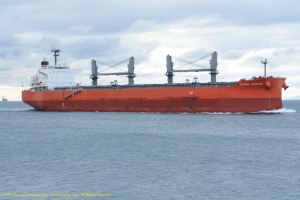
Japanese-built and -owned ultramax bulker ‘Global Success’ in Greek waters (Port of Piraeus) in November 2014… Image source: http://www.basil-karatzas.com

In the handymax / supramax / ultramax markets, the prospects have not been much rosier; there has been a great deal of concern about the outstanding orderbook in the sector, although the economics at present are better pari passu to other asset classes: the freight revenue line is as bad as for bigger vessels but at least the costs basis is of a smaller scale. Crown Shipping sold recently to Ocean Agencies two prompt resales (Hull Nos ZJB-401/-402, 63,000 dwt, Sinopacific, Zhejiang, 2015) at $27 mil, each. In late spring, Da Sin Shipping sold the memorably-named MV ‘Mandarin Wisdom’ (63,500 dwt, Jiangsu Hantong H.I., 2014) at close to $29 mil to Erasmus Investments; at the beginning of 2014, in January, Greek interests acquired MV ‘Dietrich Oldendorff’ (63,500 dwt, Sinopacific Dayang, 2013) at $32 mil; the down-slopping asset trend is obvious since the beginning of the year. Again, Daiichi Chuo has sold MV ‘Sansho’ (55,800 dwt, I.H.I., 2012) at $24.5 mil to European interests; similarly, Japanese-based Noma Kaium sold MV ‘Ruby Halo’ (58,000 dwt, Tsuneishi Cebu, 2011) to First Steamship for $27 mil. For ‘older’ vessels in this sector, K-Line again has recently been active with the sale of MV ‘Mokara Colossus’ (55,800 dwt, Kawasaki S.B., 2006) at $14.5 mil to (again) BulkSeas; British Marine sold MV ‘Gwendolen’ (50,250 dwt, Mitsui Shipbuilding, 2004) at the respectable $14 mil to Gurita Lintas; similarly, LT Ugland Bulk sold MV ‘Emily Manx’ (47,000 dwt, Shin Kurushima, 2001) at $10.25 mil, almost as much as Orient Marine Co. fetched for their MV ‘Pax Phoenix’ (50,250 dwt, Mitsui Shipbuilding, 2001) to Bangladeshi interests. Based on these recent transactions reported, one notices the nature of the sellers (Japanese, predominantly) and the shipbuilding origin of the vessels (Japanese, predominantly again – as there is little tolerance in this market for low quality tonnage); the nomenclature of the sellers re-affirms our earlier comment on FX rates and asset market drivers.

In the handysize market, prominent transactions include the sale of evocatively named MV ‘Brilliant Moira’ (28,500 dwt, I-S Shipyard, 2014) by Aono Kaiun K.K to Greek interests at $18.10 million, and the sale of MV ‘Hudson Bay’ (29,500 dwt, Shikoku Dock, 2011) at $18.4 mil to Dalex Shipping in Greece by Mitsui Warehouse; same sellers have disposed of older vessel MV ‘Durban Bulker’ (32,500 dwt, Kanda S.B., 2005) at $13.5 mil to Taylor Maritime. Phoenix Shipping & Trading has sold the vessel MV ‘Porto Maina’ (18,700 dwt, Yamanishi Zosen, 2008) at $8 mil to European interests. Again, Japanese-originating names dominate sellers and shipbuilders nomenclature.

Volume of transactions overall has been decent and, overall, it’s only marginally lower than 2013 when it was a better market overall. As expected, the beginning of 2014 was more active in terms of transactions, and with the passing of time and asset price declining, volume has been tapering off as well. While overall since 2011 the dry bulk freight market has been improving (Graph 3), the market has been moving within a ‘trading range’, between 1,000 and 2,000 points for the BDI – with the Cape market more ‘expressive’ and reactive, primarily to rhythms from China.

Baltic Indices since JAN2011_Graph 3

Graph 3: Baltic Dry Indices since January 2011 (data source: The Baltic Exchange)

All eyes are of course on 2015 and many wonder whether the BDI will manage to break out of the ‘trading range’. But again, many wonder whether any of the presents the Three Maghi (Three Wise Men) brought were a ‘market catalyst’ for a better market… gold, frankincense and myrrh don’t seem to be good enough…

Merry Christmas!


© 2013-2014 Basil M Karatzas & Karatzas Marine Advisors & Co.  All Rights Reserved.

IMPORTANT DISCLAIMER:  Access to this blog signifies the reader’s irrevocable acceptance of this disclaimer. No part of this blog can be reproduced by any means and under any circumstances, whatsoever, in whole or in part, without proper attribution or the consent of the copyright and trademark holders of this website.Whilst every effort has been made to ensure that information herewithin has been received from sources believed to be reliable and such information is believed to be accurate at the time of publishing, no warranties or assurances whatsoever are made in reference to accuracy or completeness of said information, and no liability whatsoever will be accepted for taking or failing to take any action upon any information contained in any part of this website.  Thank you for the consideration.

 

S&P, Newbuilding and Demolition Update (August 29th, 2014) – Tanker Market Focus

Since our last report, apologizing-ly more infrequent than we would prefer, the tanker market has been holding fairly well and better in comparison to the dry bulk market. Tanker freight rates have been holding at respectable levels for most of the time year to date, and above operating break-even for most of the sectors and most of the time. Clean product tankers seem to be the weakest link with freight rates well below $10,000 pd (the tremendous ordering and ‘me too’ mentality has finally caught up with the market); on the other hand, gas carriers – especially for long range tonnage, freight rates have been setting new highs on a casual basis – as high as $100,000 pd for certain vessels, on the back of increased trade, increased production and steady demand and constrained tonnage availability, at least at the moment. Mainstream crude tanker vessels have been holding their values surprisingly well, especially for modern tonnage.

China has been increasingly dependent on more crude oil imports: while monthly Chinese crude imports fluctuate based on inventory buildups and refinery expansion, Chinese crude oil imports effectively increased from 4.3 mbpd in October 2013 to 6.1 mbpd in December 2013 to an all-time-high of 6.8 mbpd in April 2014, about 8% growth y/y from 2013Q1. In general, for 2014H1, crude oil tanker rates are at least double the levels from a year ago, with VLCCs and Aframax tankers averaging about $22,000 pd while Suezmax tankers averaging about $25,000 pd in the spot market. Still, these numbers are not terribly healthy and cannot support the cost base of many a modern tanker with high acquisition prices (a VLCC acquired at $100 mil, would need to see close to $50,000 pd in order to support an amortizing mortgage and allow for a single-digit return to investors); again, when these tankers were not making enough money this time last year to pay crewing and insurance, any improvement is godsend. While there are still numerous crude tanker newbuildings on order, in general, the disappointment in the market has spoiled – so far – the appetite for massive orders, and thus the rate of new orders is diminishing at a time when ton mile and demand seems to be holding steady or increasing. The second half of a year is usually more active in movement of crude oil cargoes, thus seasonality is in favor of the market. And looking longer term, crude oil production is projected to increased from about 90 million barrels per diem (mbpd) to 100 mbpd by decade’s end, it has been as reassuring as it can get, given than a couple of years ago nil or ‘negative growth’ was the base-case scenario.

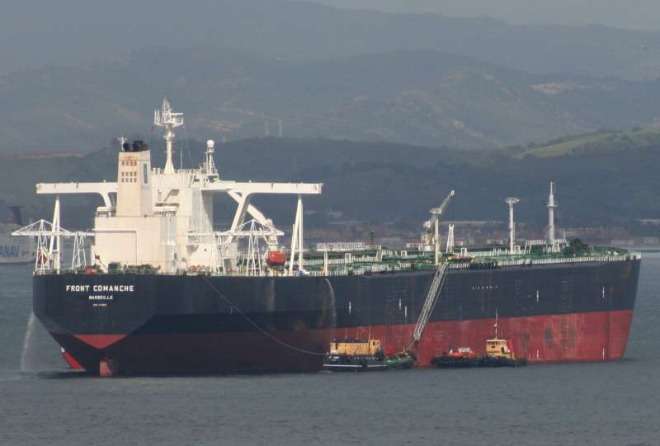
VLCC MT Front Comanche

VLCC Tanker MT„Front Comanche”

While in late July 2014, Frontline Ltd (ticker: FRO) opted to compensate Ship Finance International (ticker; SFL) $58.8 million for the early termination of the charter for three VLCCs (MT „Front Opalia”, MT ‘Front Commerce” and MT “Front Comanche” – all built in Japan in 1999) rather than spend more than $10 mil to pass mandatory special survey and drydock (SSDD) for the vessels, and eventually sell the vessels to Sinokor for $23.5 mil per vessel (a slight premium over their scrap value), a still Fredriksen-affiliated tanker company – Independent Tankers Corporation Limited (ticker: VLCCF) has sold the one-year-older VLCC tanker MT „Ulriken” (1998, 310,000 DWT, Samsung Heavy) at $26 million, admittedly a very strong price for her age; the vessel, however, has valid certificates and good survey position till December 2018. Similarly aged VLCC tanker MT „Neptune Glory” (1998, 299,000 DWT, Daewoo) has been sold at a softer price of $24 mil, with class certificates and survey position good till April 2018; this sale allegedly should have been at premium pricing given the ‘subjects’ to conversion to offshore asset for Nigerian tender. Although survey position has been getting to be a crucial factor for pricing crude tanker vessels around their 3rd Special Survey (15th anniversary from shipbuilder), pricing seems to be vessel and transaction specific, making vessel valuations a rather customized exercise rather then the output of an algorithm. VLCC tanker MT „DS Victory” (delivered in ‘this part of the century’ 2001, 299,000 DWT, Daewoo) was sold to Greek buyers (NGM Energy / Moundreas) at $33.5 million; vessels built after 2000 are priced and depreciated differently than vessels built prior to the millennium, but the MT „DS Victory” seems to be a very good vessel in terms of cargo capacities, specifications and fuel consumption.

Suezmax MT Cygnus Voyager

Suezmax Tanker MT „Cygnus Voyager”

In the Suezmax tanker market, Chevron Shipping has exercised the option to acquire three Suezmax tankers already under their long-term bareboat charter for an undisclosed remuneration; vessels were owned by Independent Tankers Corporation Limited (ticker: VLCCF) and were MT „Cygnus Voyager” (1993, 157,000 DWT, IHI (Japan)), MT „Sirius Voyager” (156,500 DWT, 1994, Ishibras (Brazil)) and MT „Altair Voyager” (135,000 DWT, 1993, Ishibras (Brazil)); these are 20+ year old crude oil tankers and it’s extremely interesting seeing a major-oil-company-affiliated shipping company ‘coming close’ to such old tonnage, whether chartering or ownership. It’s even more interesting seeing Brazilian-built tankers acquired by a major-oil-affiliated shipping company given than Brazilian-built vessel do not exactly enjoy high reputational respect, primarily in terms of quality of steel plate. Recent Suezmax tanker sales have been the sale of MT „Huelva Spirit” (160,000 DWT, 2001, Daewoo) to Middle-eastern buyers at excess of $18 mil, and the very strong price of MT „Cape Balder” (160,000 DWT, 2000, Hyundai Heavy) from German KG-house for conversion at a very strong pricing in excess of $18 mil. A very interesting sale at the very strong price of $65 mil has been reported in early August of MT „Cap Isabella” (158,000 DWT, 2013, Samsung Heavy); publicly listed Euronav, as the bareboat charterer of the vessel with profit sharing in a potential sale, has confirmed the sale in a press release and their book profit of $4.3 mil but not the actual sale price; as buyer for the vessel has been reported Polembros Shipping of Greece who are known to be opportunistic buyers and very much price conscious, this sale deserves special consideration especially given that the vessel is not ‘eco design’.

Aframax MT Maersk Prime

Aframax Tanker MT „Maersk Prime”

In the Aframax tanker market, earlier in August, the Chinese-built in 1998 LR2 tanker MT „DL Iris” (100,000 DWT, 1998, Dalian) was sold at the reflectively very strong price of $10.5 mil. However, the vessel has been sold ‘on subjects’ which demand a premium on pricing; further to it, the vessel had underwent her 3rd SSDD last year at a cost of $4.5 mil with extensive steel place replacing and installation of heating coils, thus the pricing at $10.5 mil is not much flattering or of excess of scrap value (estimated in the $7 mil range) despite vessel certification validity till 2018. Earlier in the year, MT „Maersk Prime” (110,000 DWT, 1999, Dalian) was sold at $12 mil, thus the sale of MT „DL Iris” is not as appealing as it appears on surface; this market is heavily biased against tonnage built in 1998 and earlier. Two weeks ago, Chinese-built modern aframax tankers MT „DT Providence” and MT „Enrica Lexie” (104,000 DWT, 2008, Shanghai Waigaoquiao (SWS, China)) were sold from Italy’s Fratelli Armatori D’Amato Group to two Greek buyers in individual transactions at $33.5 mil each, which appears to be slightly higher than market levels and implying some market optimism. The easiest found comparable sale of Chinese-built aframax tonnage has been the sale of MT „Valdarno”, MT „Vallesina”, MT „Valbrenta” and MT „Valfoglia” (104,000 DWT, 2009, Hudong Zhonghua) which were sold in January this year at $30 mil each from Montanari to affiliates of Teekay (Teekay Investment Limited, ticker: TIL); it would look that the market has been looking up since January for modern aframax tonnage, although the Montanari tonnage was not well marketed for sale or perceived by buyers in January. The slightly older aframax tanker MT „Ambelos” (105,000 DWT, 2006, Sumitomo) was sold by Greek owners (Samos Shipping) to Pakistan National Shipping Corporation (PNSC) at $33 million, a strong pricing, again from quality Japanese-built tonnage. Just a week earlier, still Japanese-built tonnage MT „Morning Express” (105,000 DWT, 2000, Sumitomo) had achieved the rather anemic price of $11.5 mil from Japanese sellers, but again, more often than not, the way a vessel is marketed for sale affects the sale price indeed, irrespective of market conditions or tonnage quality.

The chemical and product tanker markets have been experiencing a rather calm summer; the freight market has been just acceptable and the orderbook has been a concern for many market players, especially for institutional investors who have had been dominating the market spirits of these sectors in a while. An interesting transaction has been the sale of Hull No 5126 (TBN MT „Amethyst” (50,000 DWT, 2014, SPP Shipbuilding) at SPP Shipbuilding in S Korea from Greece’s Ceres Hellenic Group (Peter Livanos) to Scorpio Tankers (ticker: STNG) at $37.1 million. The price seems to be approximately $2 mil above prevailing market levels, but again, in a becalmed market of freight rates un-expectedly low, one needs a transaction that originates waves or even maintaining the status quo that projections had been built upon.

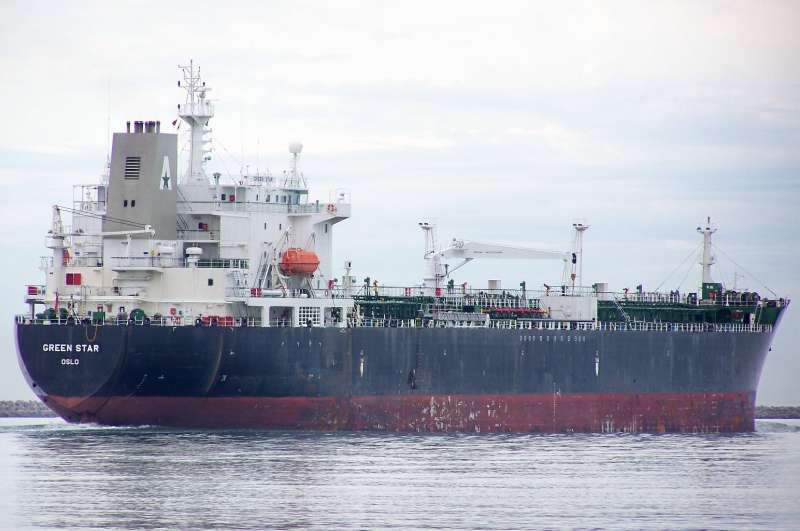
Handy Chemical / Products Tanker MT „Green Stars"

Handy Chemical / Products Tanker MT „Green Stars”

For smaller chemical tankers, the sale of MT „Green Stars” (36,000 DWT, 2001, Daedong S.B., / IMO III tanker) at $12.5 million has taken place into this rather quiet segment of the market; however, the sale seems to indicate a rather strong market for smaller chemical and product tankers; after all, this market has been under the radar as most emphasis on chemical and product tankers has been for tonnage newer than five-years old and mostly for MR2 tanker of about 50,000 dwt.

Given that summer is seasonally the weakest period of the year for tankers and that this time last year (and the summers before) tankers – especially crude oil tankers – were happy to keep busy at any rate, this summer has been encouragingly robust, so much so as to make many investors believe that tankers are long due their place in the sun, especially since this summer sun has been unduly unkind to the dry bulk market, making any comparisons between market sectors much more favorable.


© 2013-2014 Basil M Karatzas & Karatzas Marine Advisors & Co.  All Rights Reserved.

IMPORTANT DISCLAIMER:  Access to this blog signifies the reader’s irrevocable acceptance of this disclaimer. No part of this blog can be reproduced by any means and under any circumstances, whatsoever, in whole or in part, without proper attribution or the consent of the copyright and trademark holders of this website.Whilst every effort has been made to ensure that information herewithin has been received from sources believed to be reliable and such information is believed to be accurate at the time of publishing, no warranties or assurances whatsoever are made in reference to accuracy or completeness of said information, and no liability whatsoever will be accepted for taking or failing to take any action upon any information contained in any part of this website.  Thank you for the consideration.